Calm Whole Home Systems for Small Spaces That Work Effortlessly
Whole home systems for small spaces are not about adding more structure to your life. They are about removing friction so your home quietly supports you from morning to night.
In a small home, every corner matters. Every surface connects. And when things feel off, it is rarely just one room. It is the way everything interacts.
This is where whole home systems make the difference. They help your space feel calm, connected, and easy to maintain without constant effort.
Why Small Homes Need Systems, Not Just Storage
It is easy to focus on organizing one drawer or decluttering one room. But small spaces do not function in isolation.
A cluttered entryway affects your living room. A messy kitchen spills into your daily routine. One friction point creates another.
That is why whole home systems for small spaces focus on how your home works as a complete environment.
If you have already explored storage systems that actually work, you have the foundation. Now it is about connecting those systems across your entire home.
The 4 Core Systems Every Small Home Needs
You do not need dozens of routines or complicated setups. Most small homes function beautifully with just a few simple, connected systems.
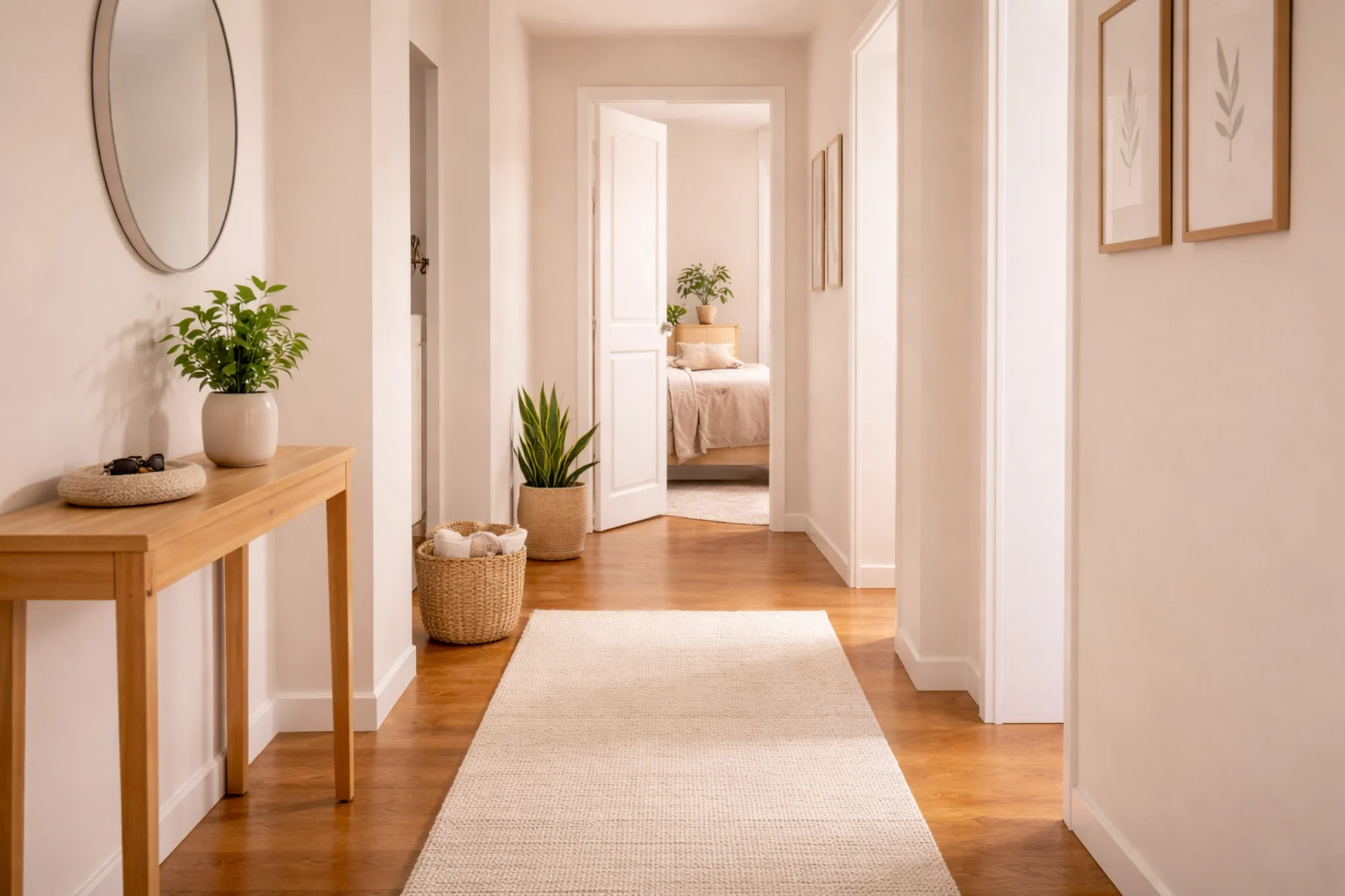
1. Movement Flow System
This is how you naturally move through your home.
Think about:
- where you drop things when you walk in
- how you move between kitchen and living area
- what slows you down
Small adjustments, like placing essentials where your habits already exist, can completely change how your space feels.
2. Daily Reset System
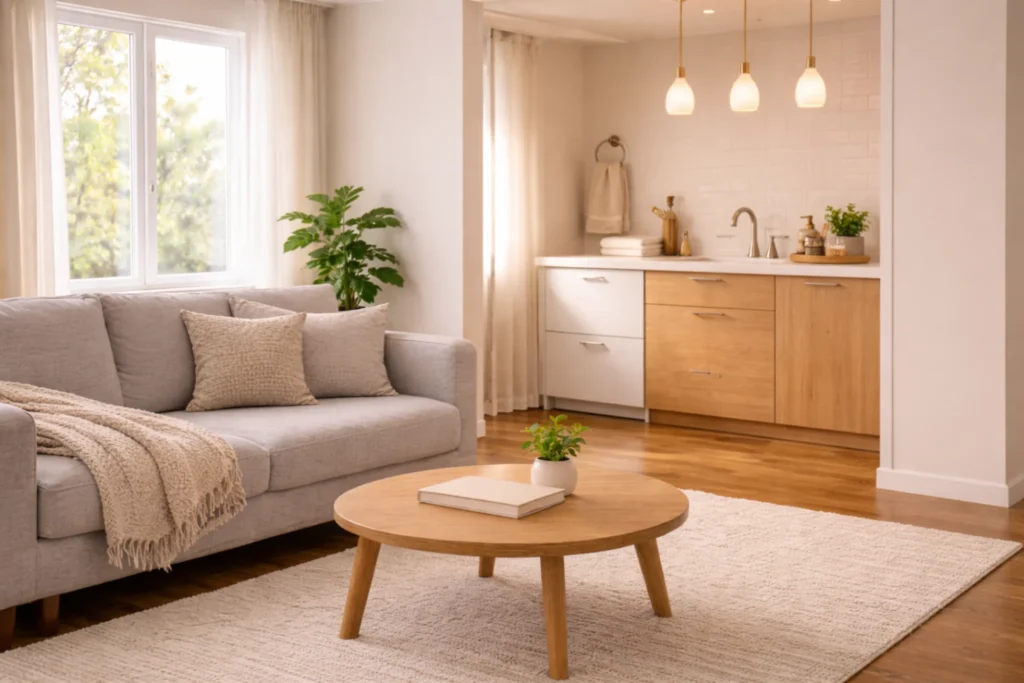
This is not a deep clean. It is a light, repeatable way to bring your home back to baseline.
Your daily reset routine for small homes likely already introduced this idea. Here, it becomes part of a bigger system.
A few minutes in the evening:
- clearing surfaces
- folding blankets
- resetting key areas
This keeps your entire home from building silent clutter.
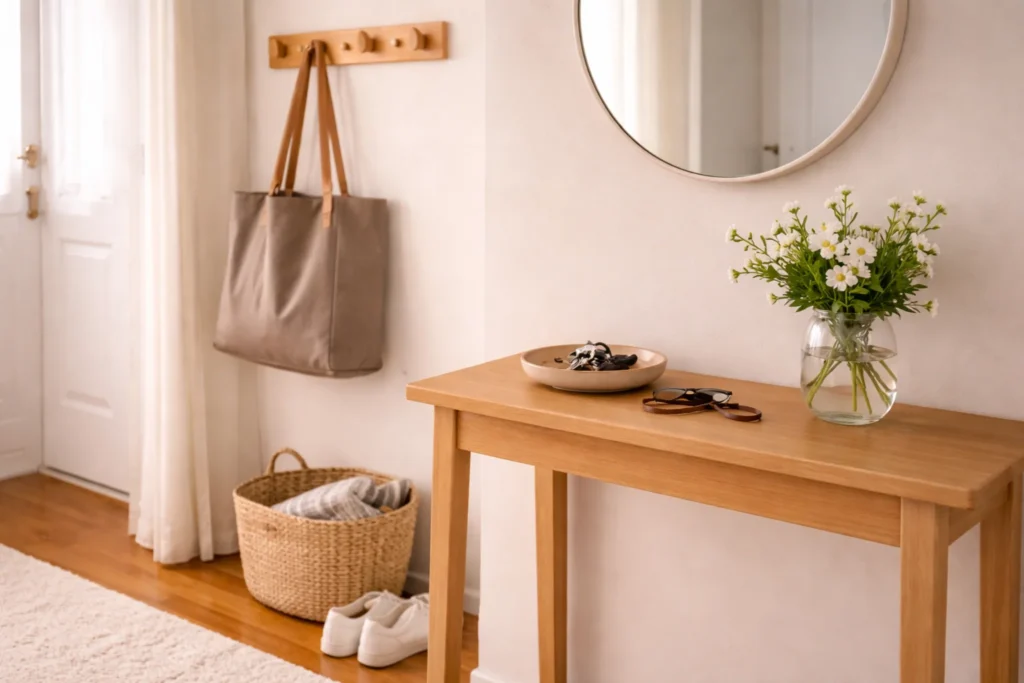
3. Drop Zone System
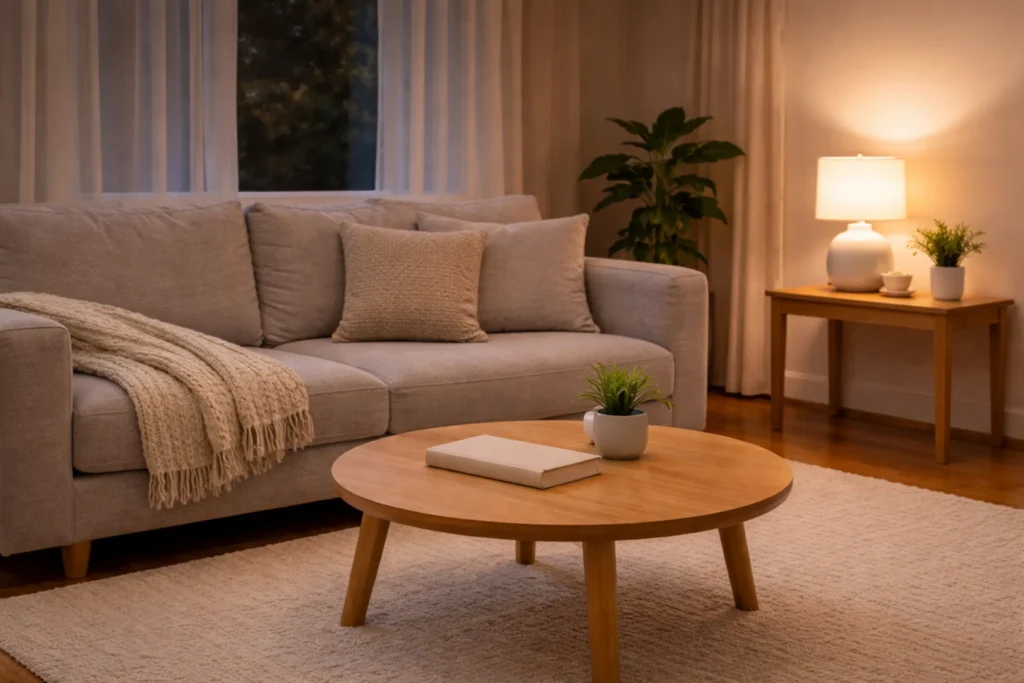
Every small home needs intentional landing spots.
Without them:
- items spread across surfaces
- clutter feels constant
- tidying feels endless
A simple tray, basket, or designated surface can act as a controlled drop zone.
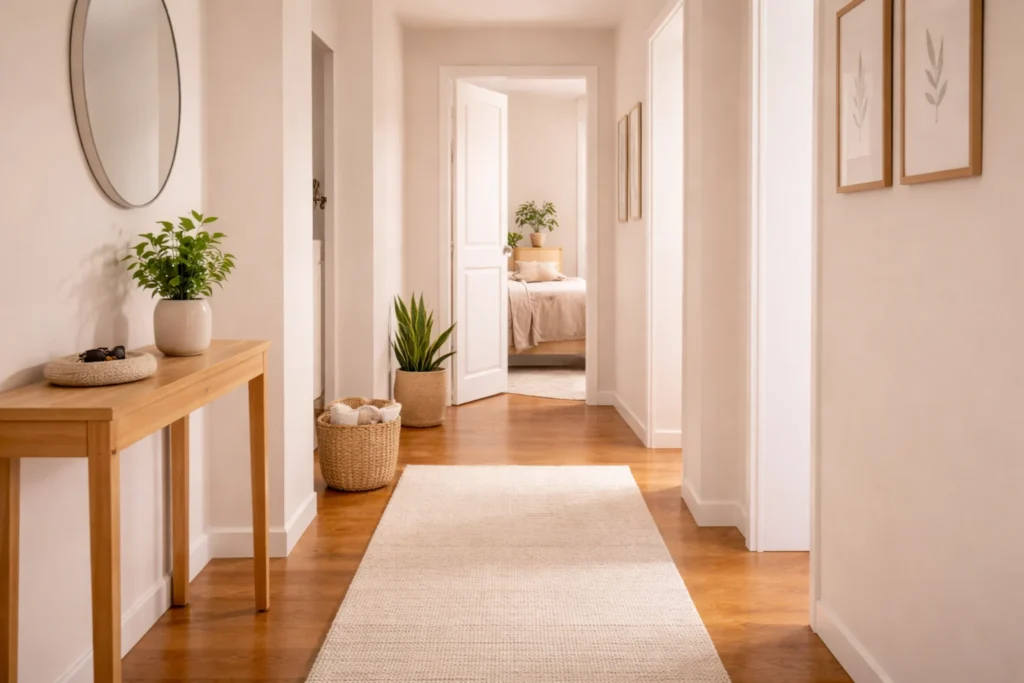
4. Visual Calm System
Not everything needs to be hidden, but everything should feel intentional.
This system focuses on:
- limiting what stays visible
- keeping surfaces breathable
- using simple groupings instead of scattered items
It connects closely with practical small space living ideas, where the goal is not perfection, but clarity.
How to Connect Rooms Without Overthinking It
One of the biggest shifts happens when you stop treating rooms separately.
Instead of asking:
- “Is this room organized?”
Start asking:
- “Does this room connect smoothly to the next?”
For example:
- a clear kitchen counter supports a calm living area
- a reset bathroom vanity makes mornings easier
- an organized entry reduces clutter everywhere else
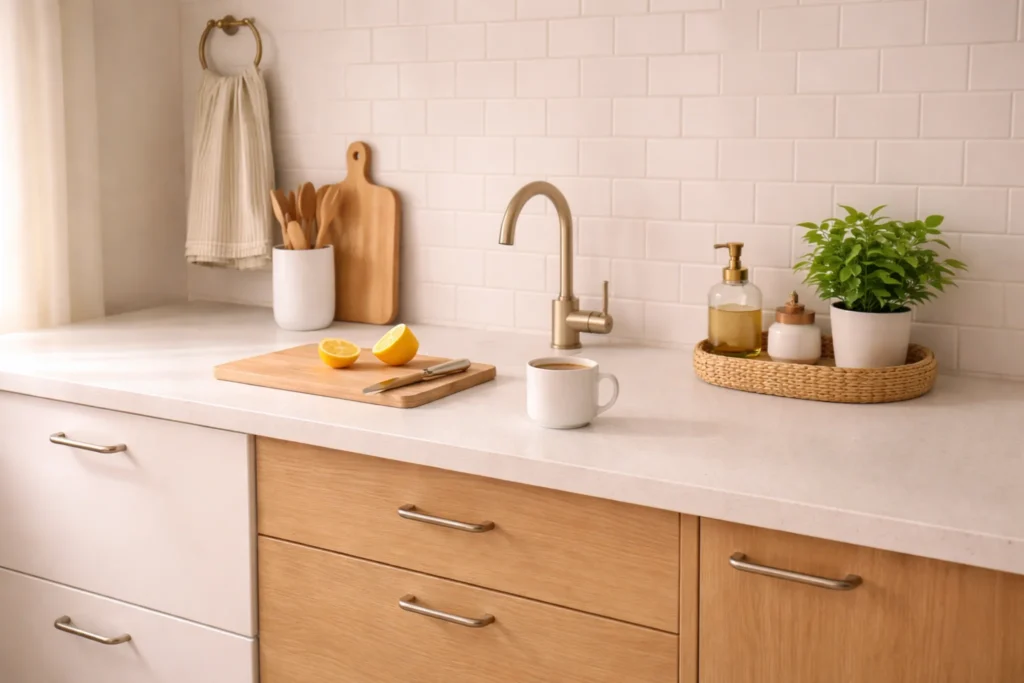
Consistency across rooms matters more than perfection in any single one.
A Simple Whole Home Rhythm That Actually Works
Instead of rigid schedules, think in gentle phases:
Morning
- light reset of key surfaces
- prepare one area for the day
Midday
- small adjustments, not full resets
Evening
- return your home to baseline
- focus on visible areas
This connects naturally with your existing weekly flow routines for small homes, but keeps the approach lighter and more flexible.
Common Mistakes That Break Small Home Systems
Even the best intentions can create friction if systems are not aligned.
Over-organizing one space
Focusing too much on one room can make others feel neglected.
Ignoring transitions
The space between rooms matters just as much as the rooms themselves.
Creating too many systems
More systems do not mean better results. Simplicity is what makes systems sustainable.
Start Small, Then Let It Connect
You do not need to redesign your entire home overnight.
Start with one:
- surface
- routine
- drop zone
Let it feel natural. Then expand slowly.
Over time, your home begins to support you in a way that feels almost invisible.
That is the goal of whole home systems for small spaces. Not perfection, but quiet consistency that makes daily life easier.
A Quiet Shift That Changes Everything
When your home works as a connected system, something subtle happens.
You stop managing your space constantly.
You stop feeling behind.
And your home begins to feel like it is working with you, not against you.
That is not about doing more.
It is about designing less friction into the way you already live.