Storage & Organization That Actually Works for Small Spaces
Storage & organization are the quiet backbone of smart space living. When storage is intentional, even a small home feels calm, flexible, and easy to live in. When it is not, clutter creeps in no matter how beautiful the furniture looks.
This guide is not about buying more containers or forcing minimalism. It is about using storage & organization to support how you move, cook, relax, and reset in your space, especially when square footage is limited and budgets matter.
If you have ever felt like your home should work better than it does, storage is usually the missing link.
Why Storage & Organization Matter More in Small Homes
In large homes, clutter can hide. In small homes, it shows immediately.
Good storage & organization allow you to:
- Maintain visual calm
- Protect clear walkways
- Reduce decision fatigue
- Make daily routines easier
When storage is aligned with how you actually live, your home becomes more forgiving and far less overwhelming.
This pillar connects directly to how spaces are laid out, which is why it complements the ideas in Smart Space Living so closely. If you are new to intentional layouts, you can explore that foundation here.
Start With Zones, Not Containers
Before buying anything, strong storage & organization always start with zones.
Zones define where activities happen, not just where items sit.
Common home zones include:
- Entry and drop zone
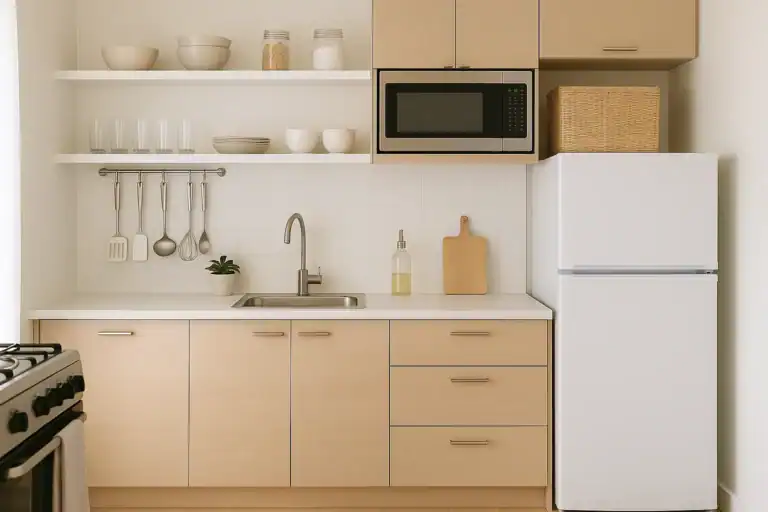
- Daily-use kitchen zone
- Bathroom reset zone
- Sleep and wind-down zone
- Work or focus zone
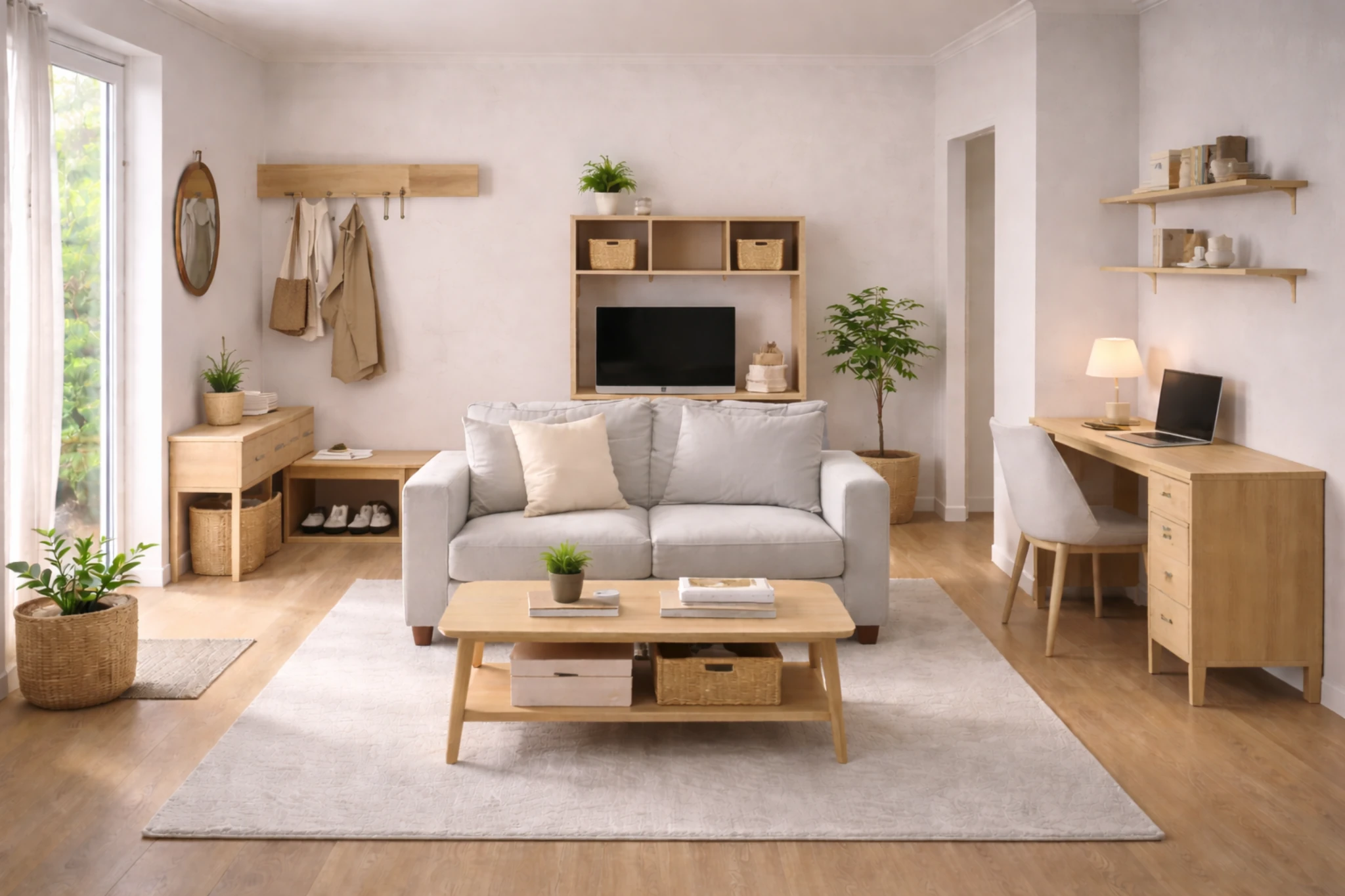
When zones are clear, storage becomes obvious. Items live where they are used, not where there happens to be space.
Zoning is especially important in open layouts and studio apartments where furniture must do more than one job.
Vertical Storage Is Your Best Friend
Floor space is limited, but walls are often underused.
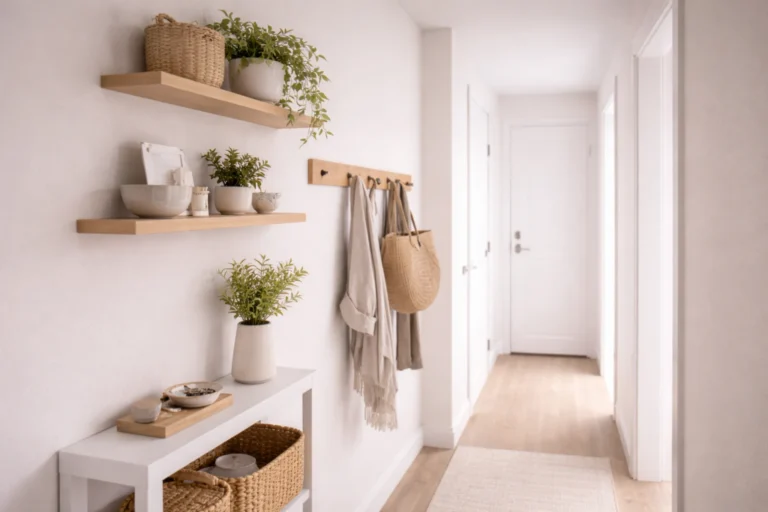
Smart storage & organization in small spaces relies heavily on vertical solutions:
- Tall shelving units
- Wall-mounted cabinets
- Floating shelves
- Over-door storage
Vertical storage keeps essentials accessible while preserving open floor space, which helps rooms feel larger and lighter.
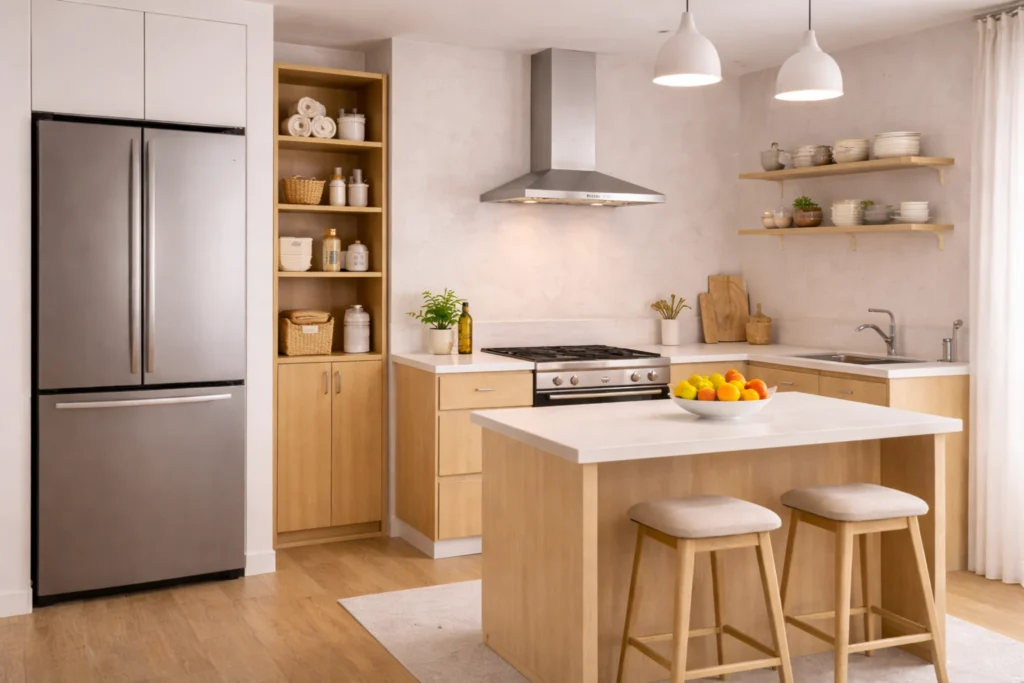
This approach shows up repeatedly in our room-specific guides, including bathrooms and bedrooms, where vertical storage often replaces bulky cabinets.
Open vs Closed Storage, Choose With Intention
Both open and closed storage play important roles in storage & organization.
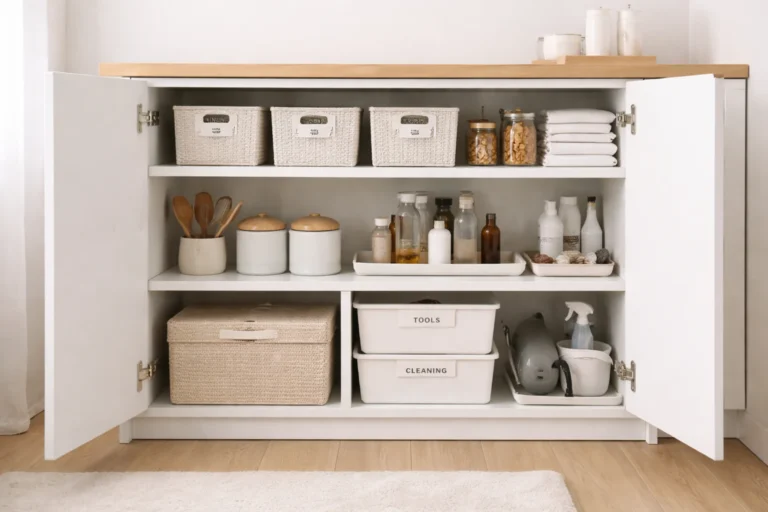
Open storage works best when:
- Items are used daily
- Visual harmony is maintained
- Storage doubles as decor
Closed storage works best when:
- Items are irregular or bulky
- Visual calm is a priority
- You want fast resets
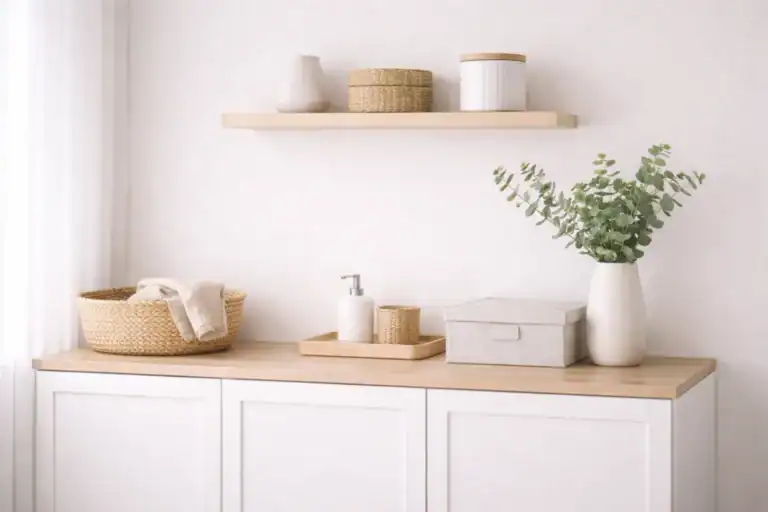
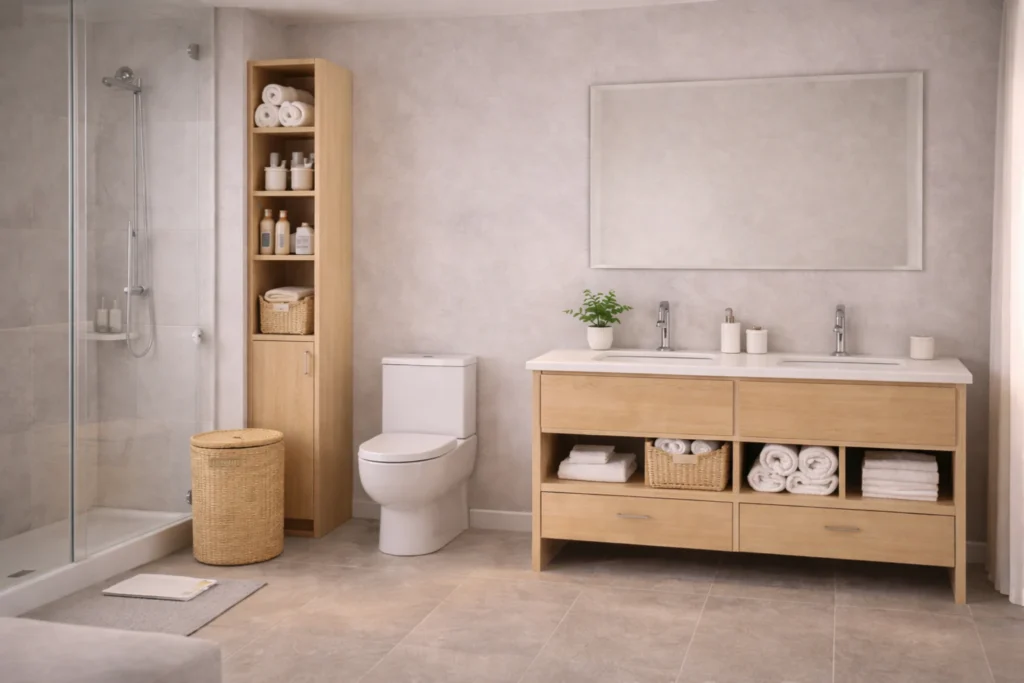
Most small homes need a mix of both. For example, bathrooms benefit from closed storage below the sink and open shelving for daily essentials. You can see how this balance works in practice inside the Bathroom Room Guides section.
Storage Should Support Daily Routines
The most effective storage & organization systems are invisible because they support habits automatically.
Ask yourself:
- What do I reach for first in the morning?
- What needs to be easy at night?
- What creates friction during cleanup?
When storage matches routines:
- Laundry stays contained
- Kitchen counters stay clear
- Bedrooms feel restful
This is why nightstand storage, bathroom drawer layouts, and kitchen prep zones matter more than decorative containers.
You will notice this principle applied consistently in our Bedroom Room Guides, where storage placement directly supports rest and reset routines:
Budget-Friendly Storage That Actually Lasts
Good storage & organization do not require custom cabinetry or expensive systems.
Budget-smart strategies include:
- Modular shelving that grows with your needs
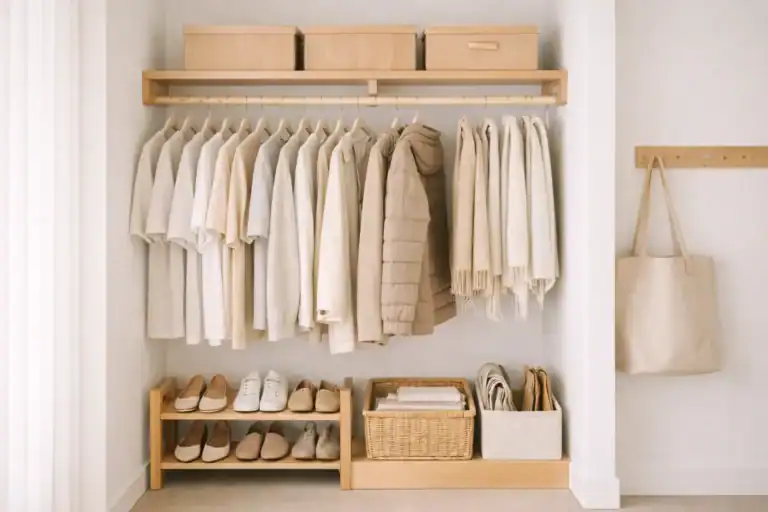
- Neutral baskets that move between rooms
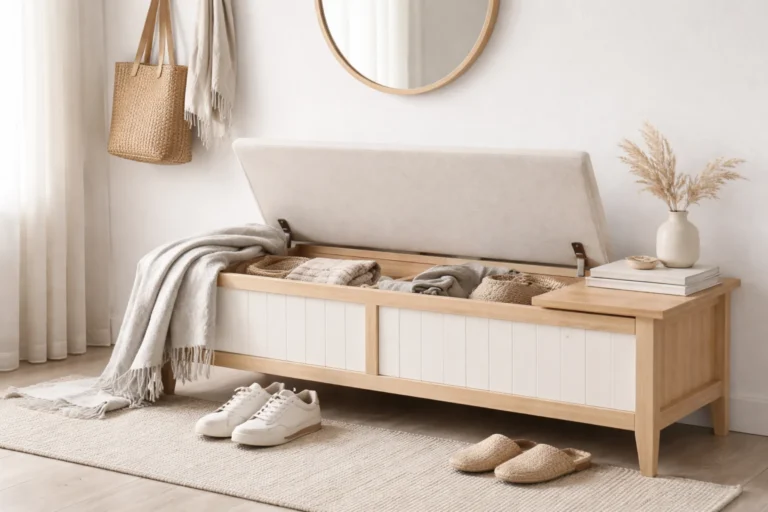
- Furniture with built-in storage
- Wall-mounted solutions instead of floor units
The goal is flexibility. Storage should adapt as your life changes, not lock you into one layout forever.
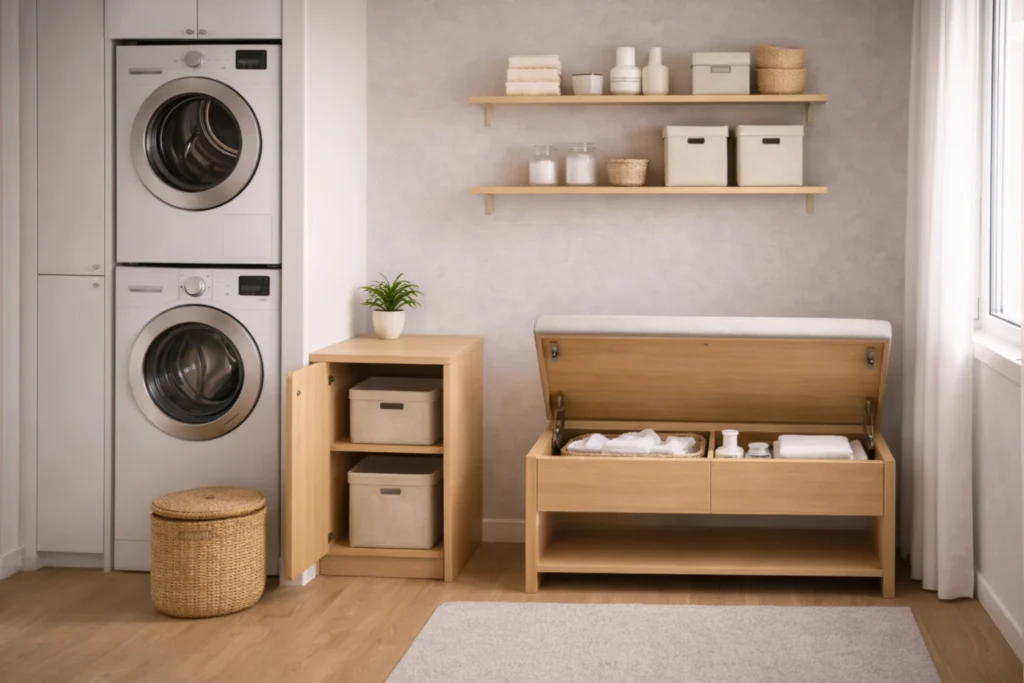
This approach pairs well with practical tools and accessories explored in Smart & Budget Home Gadgets, which focus on affordable ways to support daily living.
Organization Is About Reducing Visual Noise
Clutter is not always about volume. Often, it is about visual noise.
Strong storage & organization systems:
- Limit the number of visible item types
- Group similar materials together
- Use consistent colors and textures
This is why neutral storage pieces work so well in small homes. They let architecture and light take the lead instead of competing for attention.
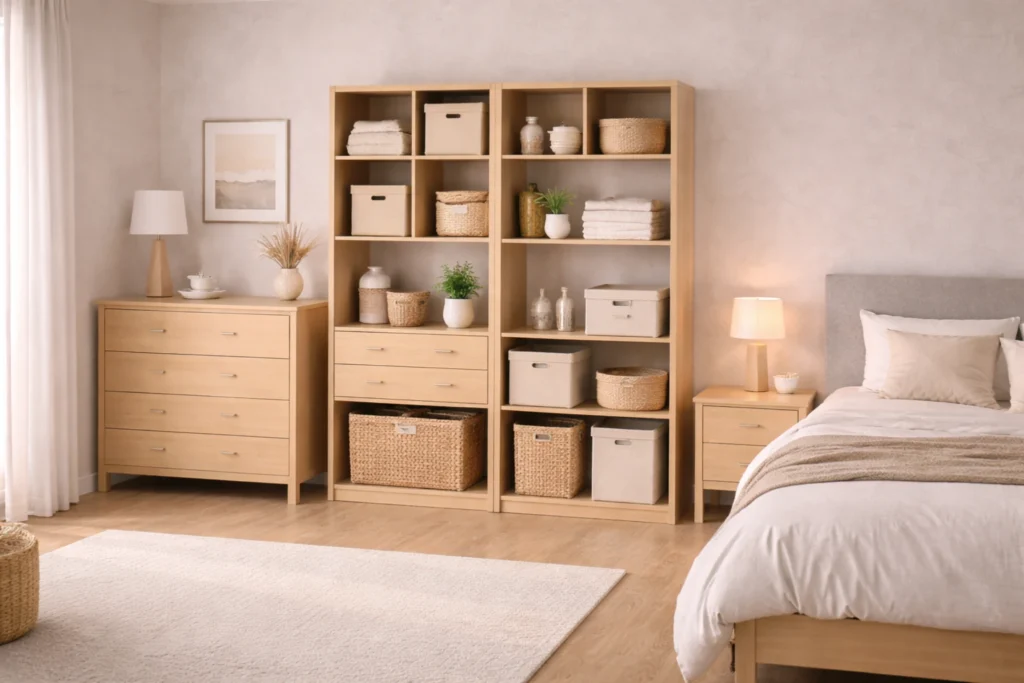
Visual calm supports mental clarity, especially in spaces where multiple functions overlap.
A Thought to Leave You With
When storage is intentional, your home stops asking for constant attention.
Good storage & organization give you back time, clarity, and flexibility. They make small spaces feel generous and everyday routines feel lighter. The goal is not perfection, but flow.
Once storage works, everything else falls into place more easily.