Small Dining Room Ideas That Feel Spacious, Calm, and Surprisingly Functional
Creating a small dining room that feels comfortable, welcoming, and functional can feel tricky at first, especially when space is limited. But with a few intentional choices, a small dining room can feel just as inviting as a larger one, sometimes even more so.
A small dining room works best when every piece earns its place. From furniture scale to layout flow, the goal is not to squeeze everything in, but to create a space that feels open, relaxed, and easy to use day to day.
Start With a Clear Purpose for Your Small Dining Room
Before choosing furniture or decor, it helps to be honest about how your small dining room is actually used.
Do you eat daily meals there, work occasionally, or host casual guests once in a while? A clear purpose makes design decisions much easier and prevents overcrowding.
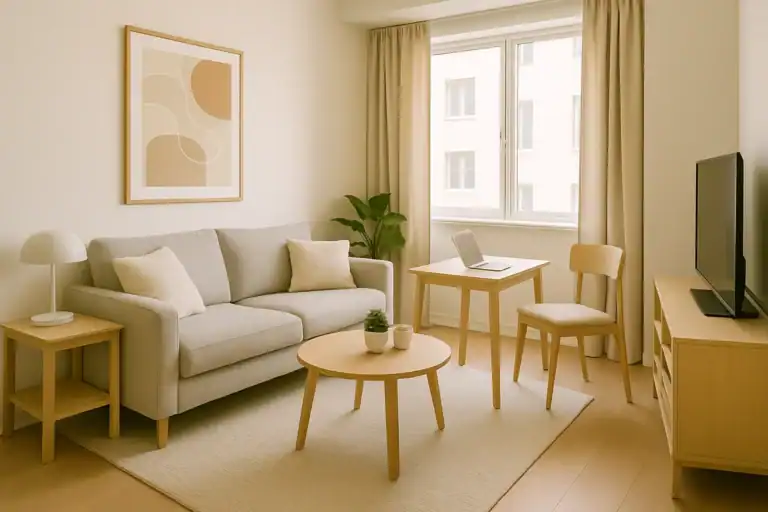
For many small homes and apartments, the dining area often shares space with the living room or kitchen. If this sounds familiar, you may also find helpful layout ideas in this related guide on living room layouts.
Choose Furniture That Matches the Scale of the Room
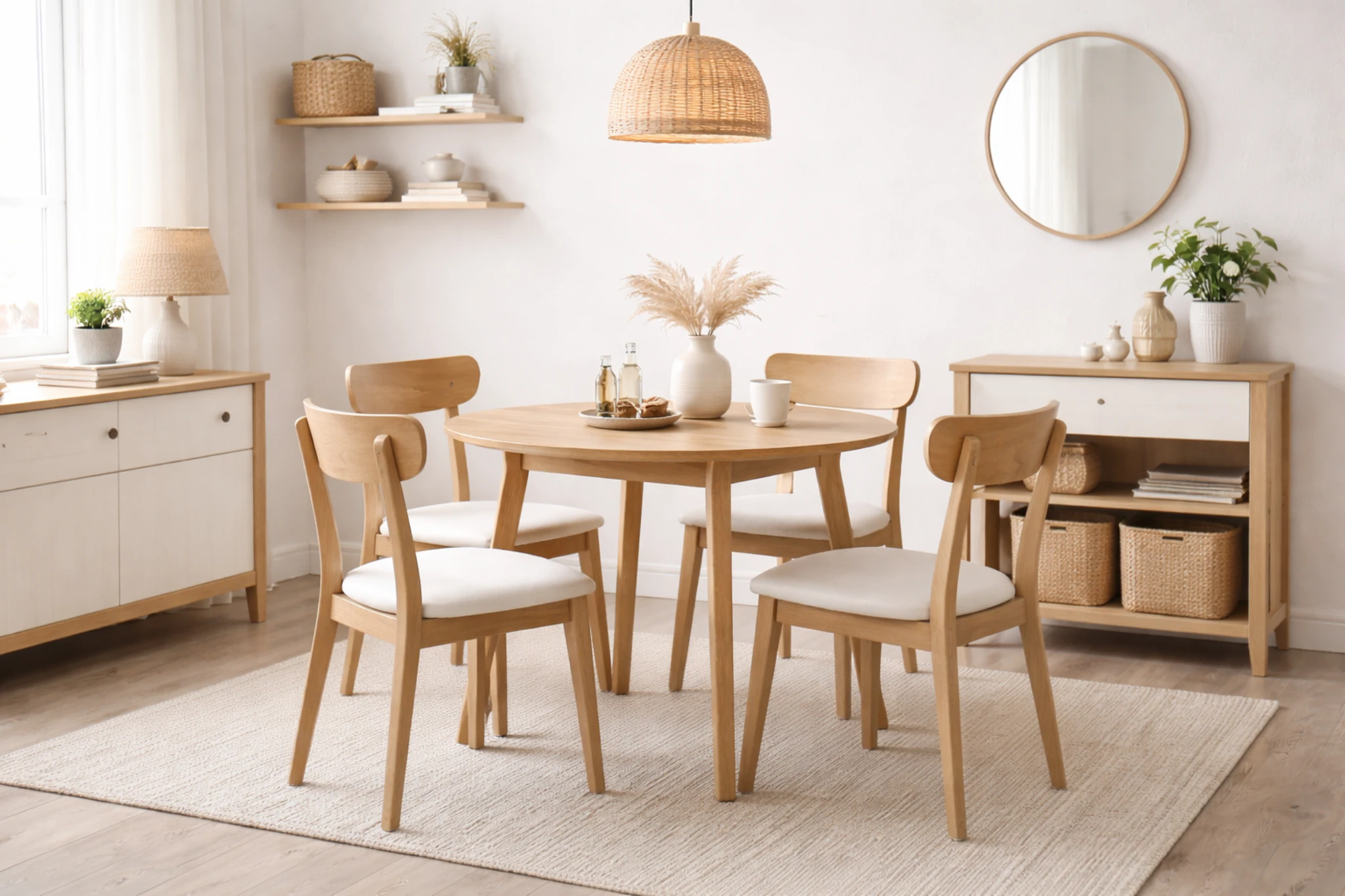
One of the most common mistakes in a small dining room is oversized furniture. Large tables and bulky chairs visually shrink the space and make movement awkward.
Instead, look for:
- Slim table legs
- Rounded or softly curved edges
- Armless dining chairs
- Lightweight materials like wood, metal, or molded plastic
These choices help the dining area feel visually lighter and easier to move around.
If you’re browsing for inspiration, looking at slim and space-conscious dining furniture can help you visualize what works best in a small dining room. Stores like IKEA offer a wide range of compact dining chairs and tables designed specifically for smaller spaces, which makes them a useful reference point when planning your layout.
Use Light and Neutral Colors to Open Up the Space
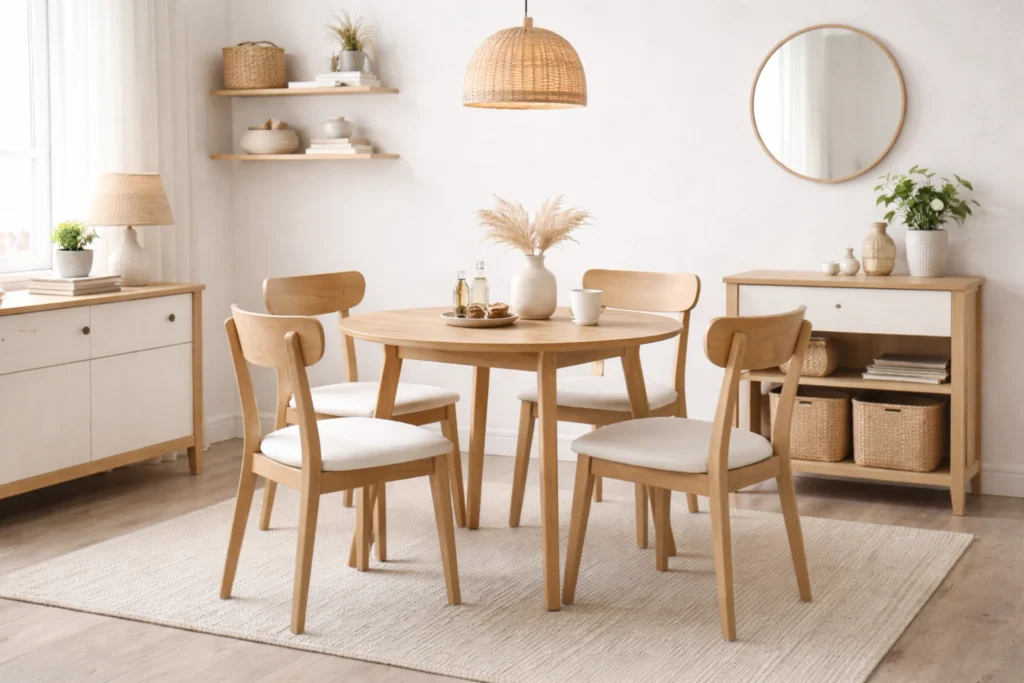
Color has a powerful impact on how a small dining room feels. Lighter tones reflect light better and help walls visually recede.
Neutral palettes such as white, warm beige, soft gray, or light wood tones work especially well in small dining spaces. You can still add personality through:
- Natural textures
- Subtle patterns
- Soft accent colors in tableware or art
If your dining area connects directly to the kitchen, keeping a similar color palette helps the space feel cohesive. You may also want to explore these small kitchen organization ideas for visual continuity
Keep the Layout Open and Walkable
A functional small dining room always prioritizes movement. Even a beautiful setup feels frustrating if chairs constantly bump into walls or cabinets.
Simple layout tips include:
- Leave enough clearance behind chairs
- Avoid pushing furniture tightly against walls unless necessary
- Use rugs that define the dining zone without overpowering it
Clear walkways instantly make the room feel more breathable and less cramped.
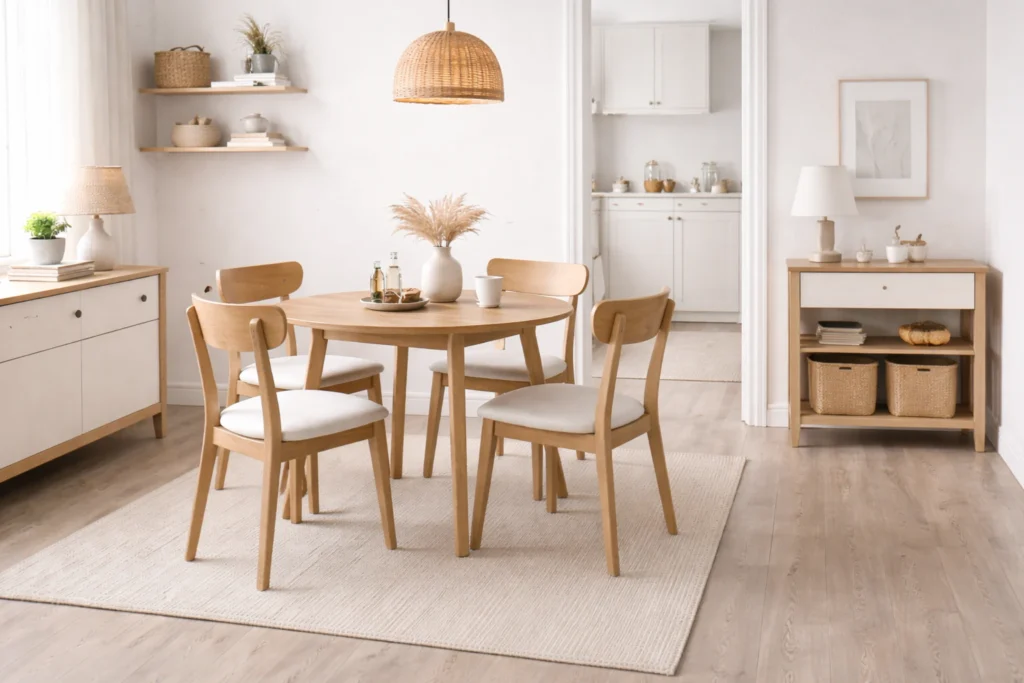
Smart Storage Without Visual Clutter
Storage is often overlooked in a small dining room, but it can make daily life much easier when done right.
Instead of large cabinets, consider:
- Wall-mounted shelves
- Slim sideboards
- Storage benches along walls
- Vertical shelving units
Closed storage works best for visual calm, while open shelving should be styled lightly to avoid clutter.
If storage is a major challenge in your home, this Storage & Organization guide may also help
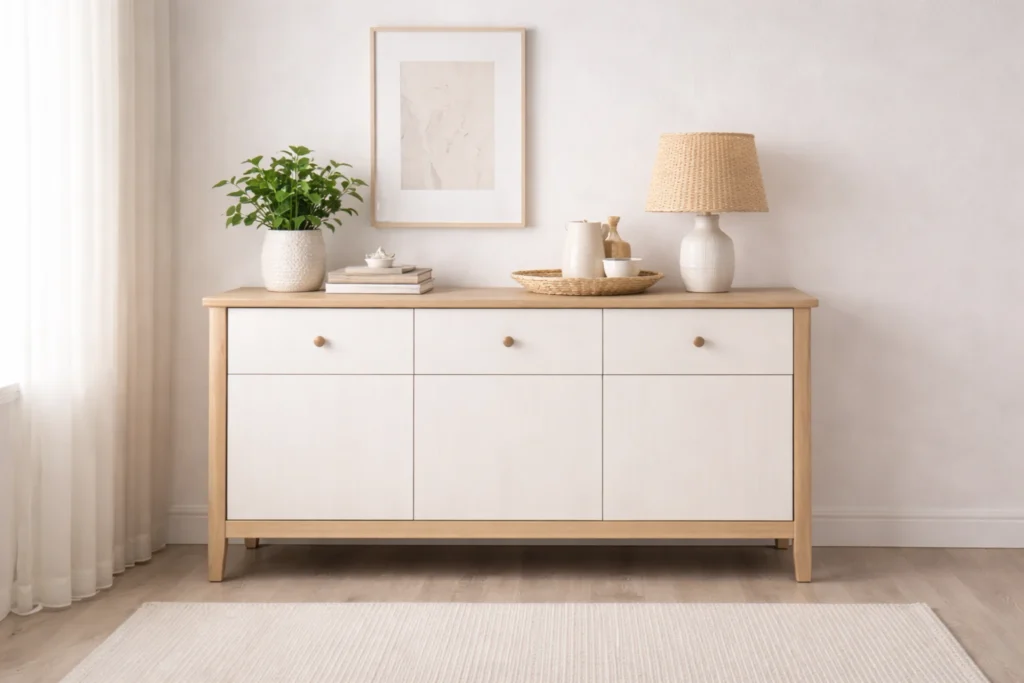
Lighting That Makes the Space Feel Intentional
Lighting plays a huge role in how a small dining room feels. The right lighting creates warmth and makes the space feel purposefully designed.
Good options include:
- A compact pendant light centered over the table
- Flush-mount ceiling lights for low ceilings
- Wall sconces if floor space is limited
Warm lighting tends to feel more inviting and works especially well for dining spaces.
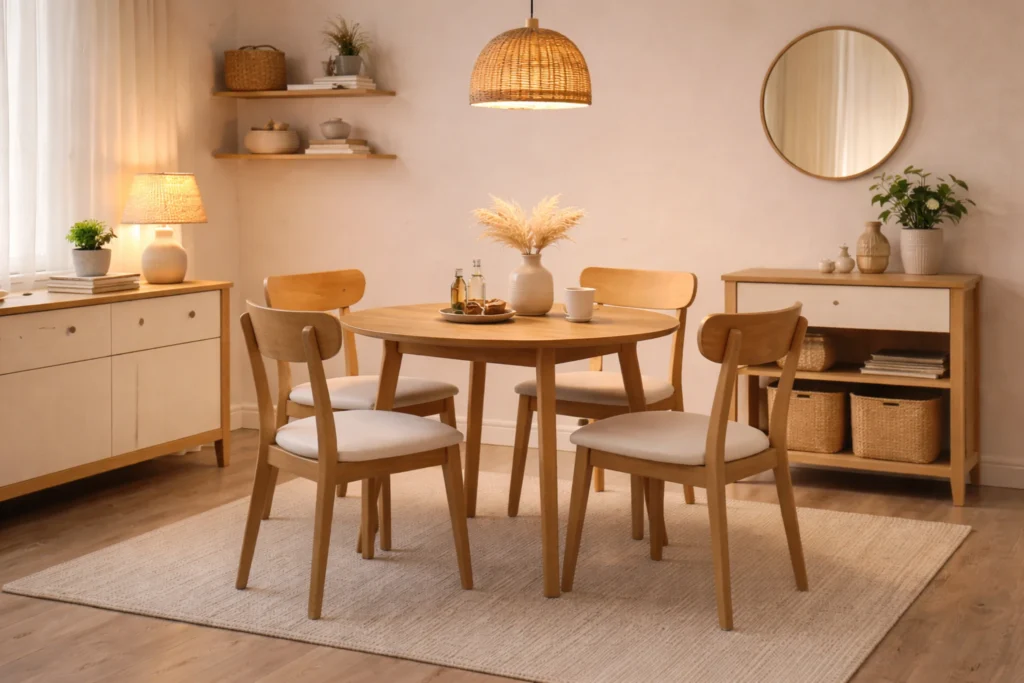
Add Personality Without Overcrowding
A small dining room doesn’t need much decor to feel finished. In fact, fewer pieces often look better.
Try adding:
- One statement artwork
- A simple mirror to reflect light
- A small centerpiece or plant
- Textured table linens
The key is restraint. Leave breathing room so the space feels calm and usable.
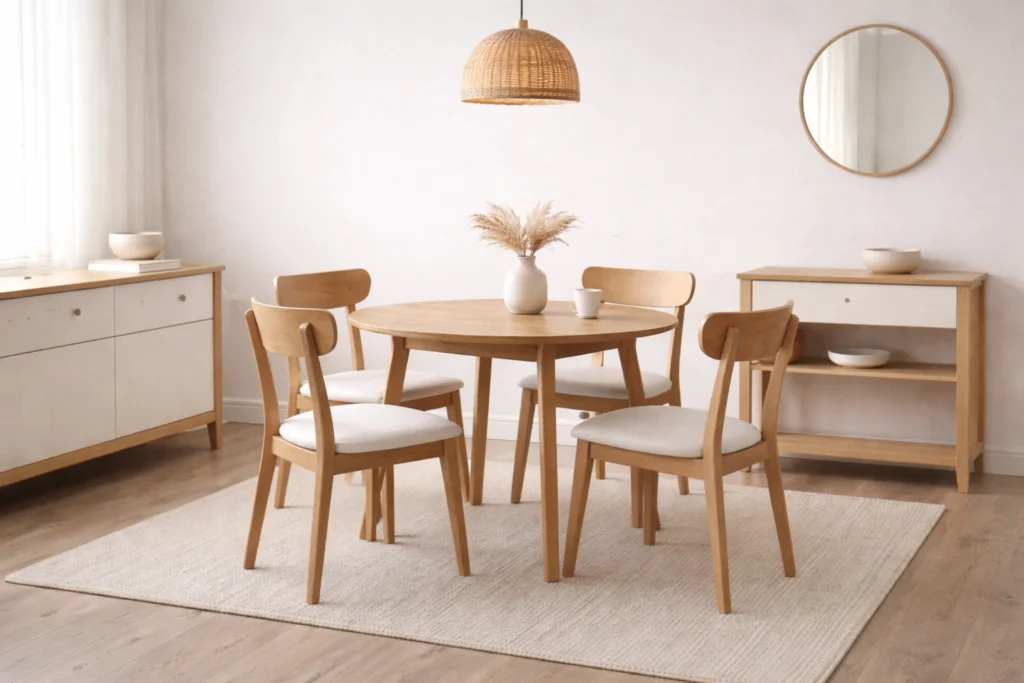
Make the Space Flexible for Everyday Life
Flexibility is one of the biggest advantages of a small dining room when designed thoughtfully.
Consider:
- Stackable or foldable chairs
- Tables that can double as a workspace
- Benches that provide extra seating when needed
This adaptability allows the dining area to evolve with your daily routines without needing constant rearrangement.
A Dining Space That Grows With You
A small dining room doesn’t need to feel limiting. With smart choices, it can feel cozy, practical, and beautifully intentional.
Focus on scale, flow, and flexibility first, then layer in warmth and personality. Over time, small adjustments can make the space feel even better without requiring a full redesign.