Small Closet Organization Ideas for Beginners, Simple Ways to Create More Space
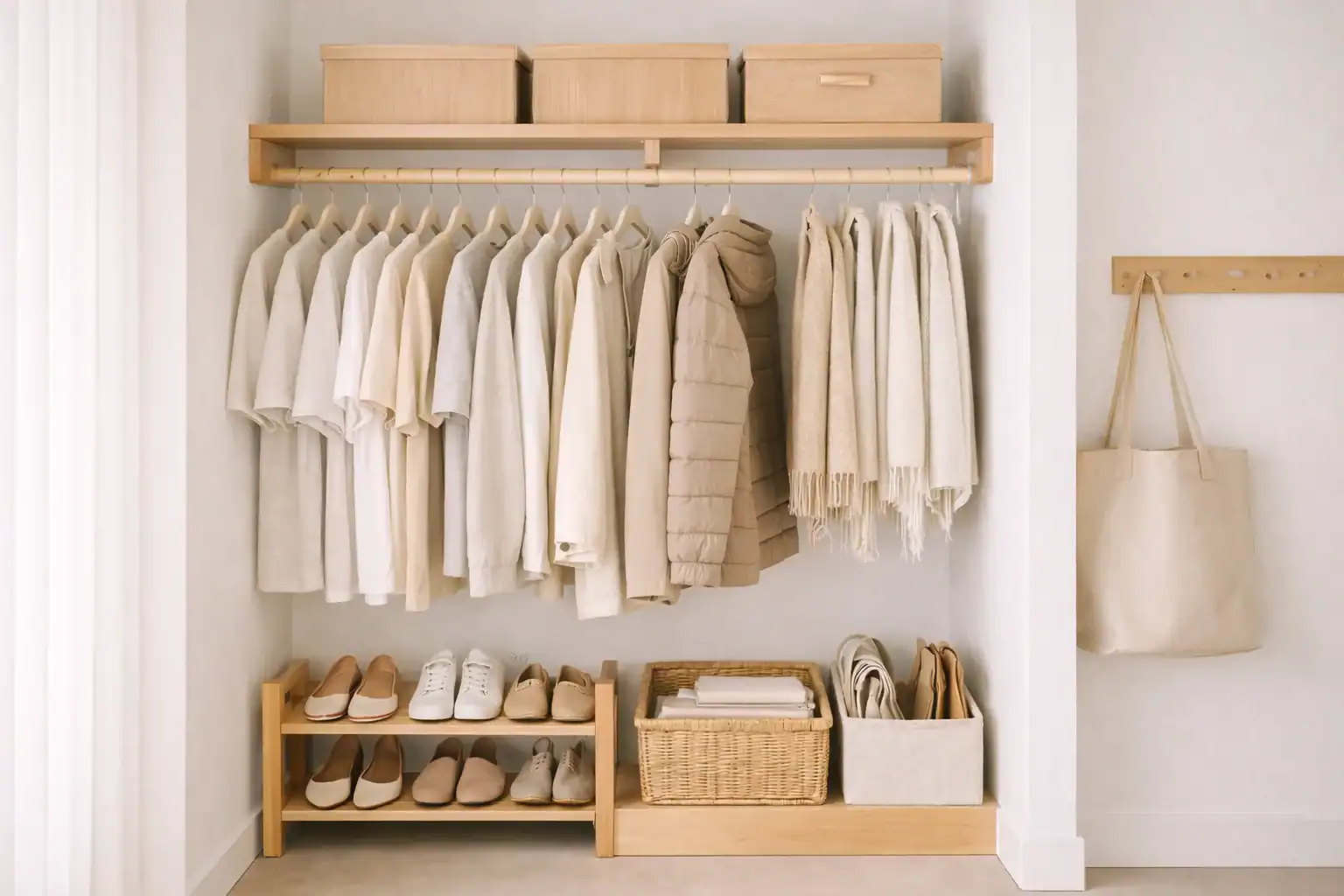
Small closet organization ideas for beginners can make a surprising difference in how your home feels day to day. When closet space is limited, clutter builds up quickly and mornings feel more stressful than they need to be. The good news is that you do not need a walk-in closet or expensive systems to get organized.
With a few smart, budget friendly changes, even the smallest closet can become functional, calm, and easy to maintain.
Start by Clearing and Grouping What You Own
Before buying organizers, take everything out of your closet. This first step is essential for all small closet organization ideas for beginners because it helps you see what you actually own.
Group items into simple categories:
- everyday clothes
- seasonal clothes
- shoes
- accessories
Once everything is grouped, it becomes much easier to decide what kind of storage you truly need.
If you are resetting your entire sleeping space, our small bedroom setup ideas for beginners work well alongside this closet refresh.
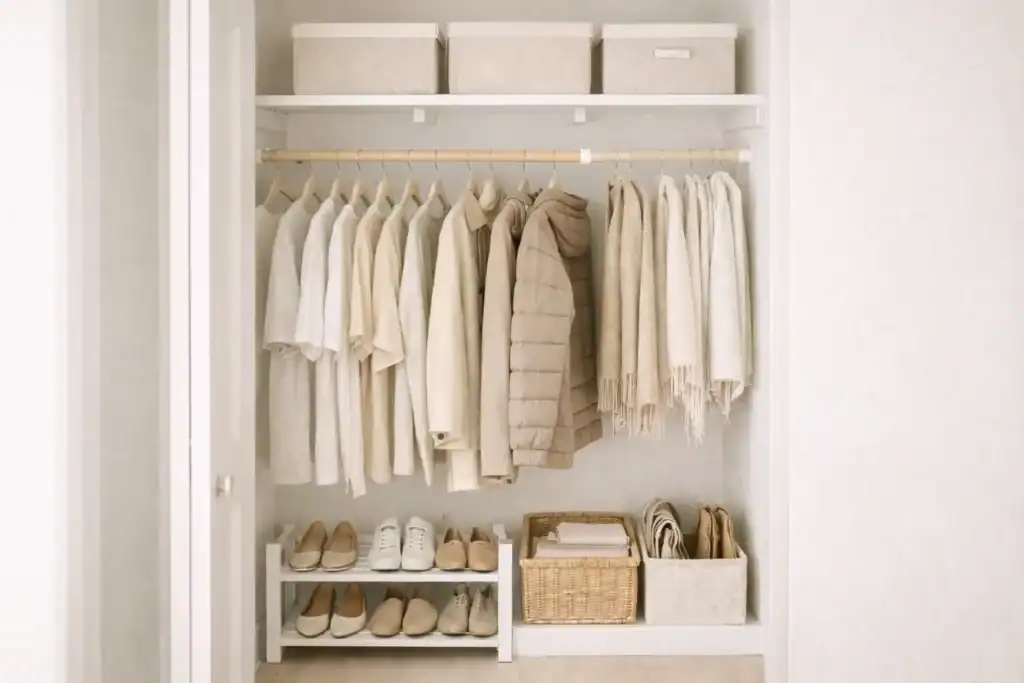
Use Vertical Space to Increase Storage
One of the most effective small closet organization ideas for beginners is using vertical space. Many small closets have unused room above the hanging rod.
Beginner friendly options include:
- stackable shelves
- hanging fabric organizers
- over the door hooks
These solutions are renter safe and instantly add storage without drilling or permanent changes.
Switch to Slim, Matching Hangers
This post may contain affiliate links. We may earn a small commission at no extra cost to you.
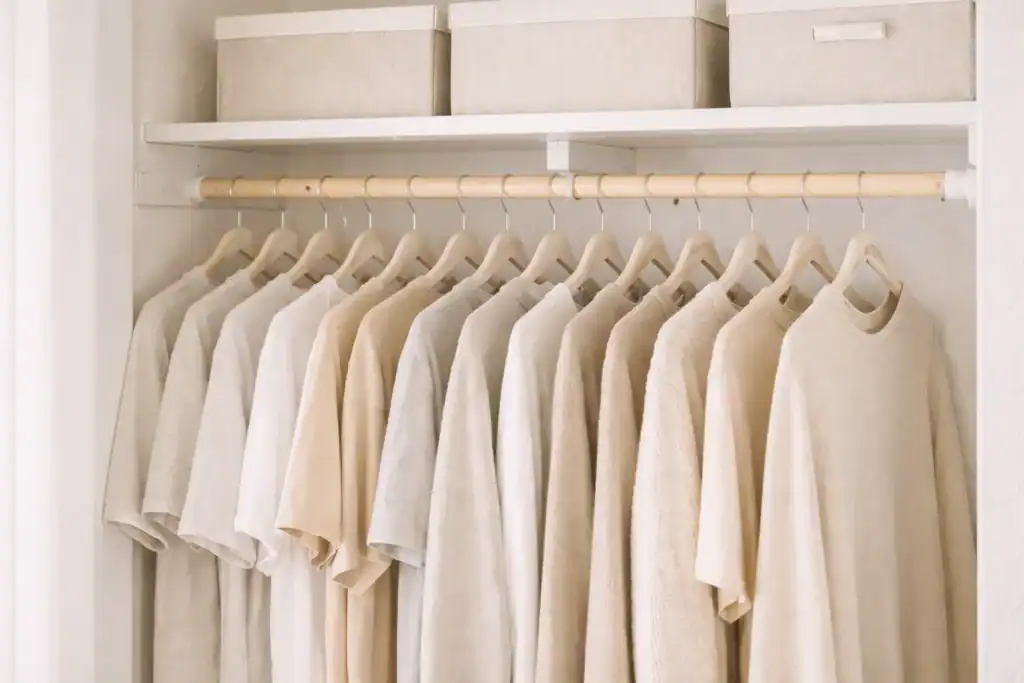
Bulky hangers waste valuable space and make closets feel crowded. Switching to slim, uniform hangers:
- creates more hanging room
- keeps clothing aligned
- makes the closet feel visually calmer
This simple change is affordable and has an immediate impact on both space and appearance.
Use Bins and Baskets to Control Small Items
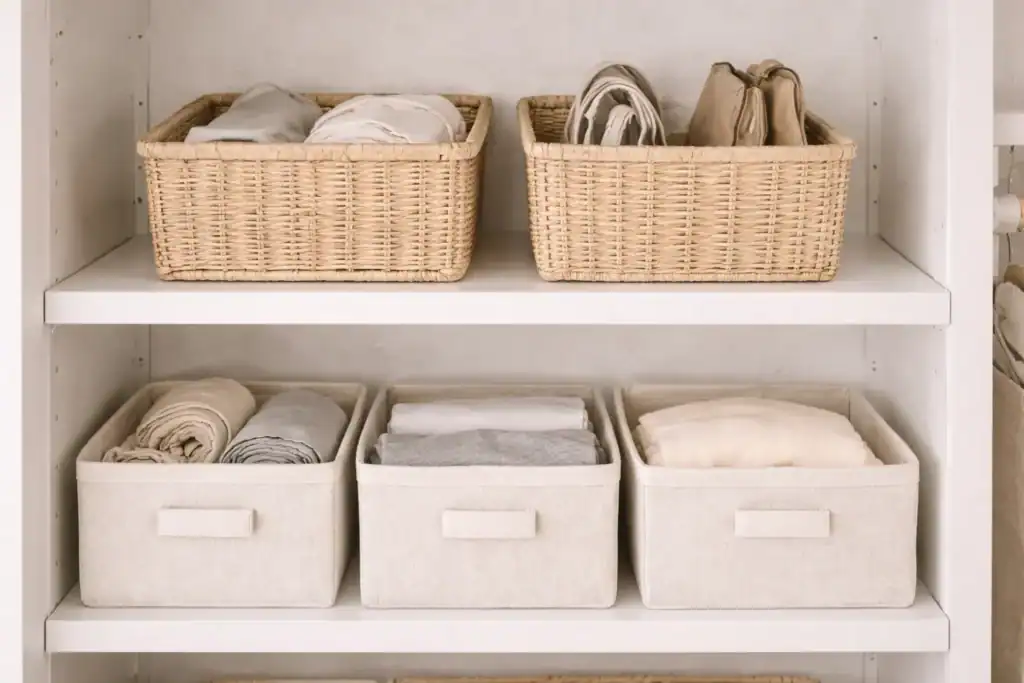
Small items often create the most visual clutter. Bins and baskets help keep everything contained and easy to find.
Use them for:
- scarves and belts
- socks and undergarments
- handbags or folded accessories
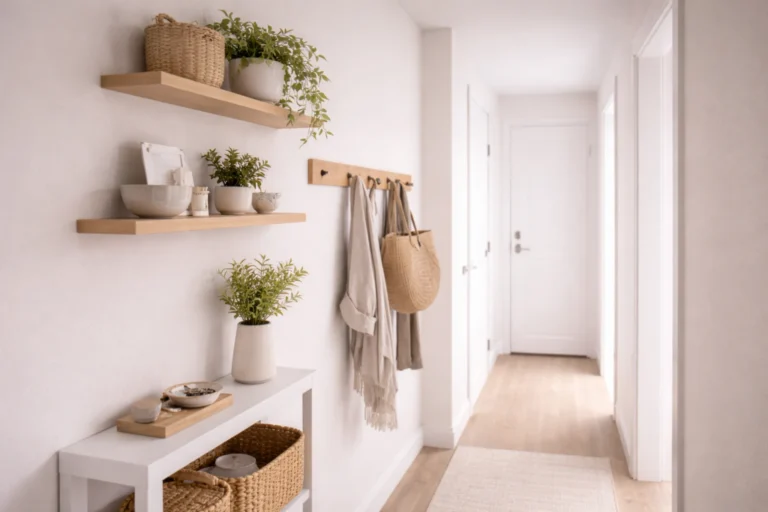
These same bin and basket ideas also work well near the front door, which we cover in our small entryway ideas for beginners.
Neutral bins work especially well in small closets because they reduce visual noise.
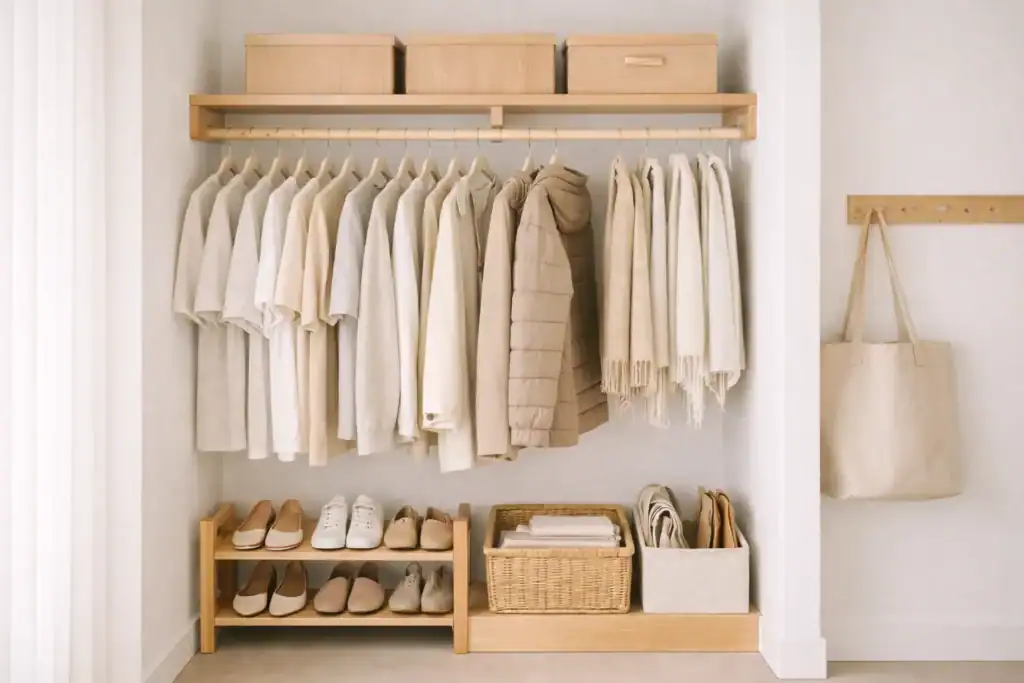
Store Shoes Vertically or Under Hanging Clothes
Shoes often take up more room than expected. Instead of lining them along the floor, try:
- vertical shoe racks
- hanging shoe organizers
- slim shelves placed under hanging clothes
These options keep shoes visible but contained, which makes daily routines easier.
Rotate Seasonal Clothing to Reduce Daily Clutter
You do not need access to every piece of clothing all year. Rotating seasonal items helps keep your closet lighter and more functional.
Store off-season clothing:
- in fabric storage bags
- on high shelves
- under the bed if needed
This simple habit is one of the most overlooked small closet organization ideas for beginners, yet it makes a big difference.
Keep Colors Light and the Setup Simple
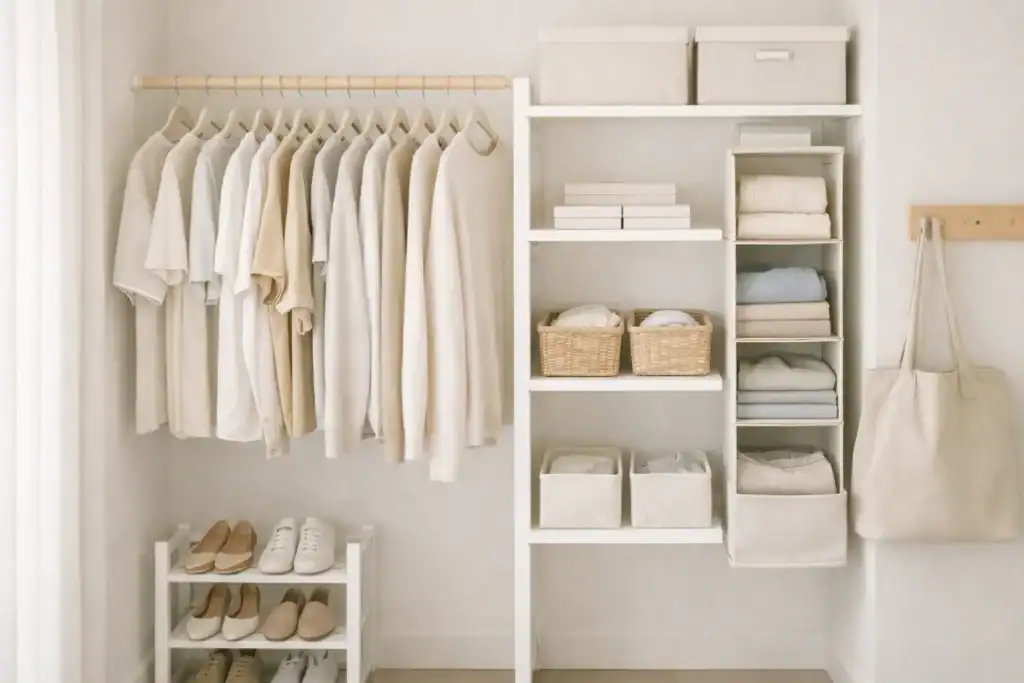
Light colors and minimal materials help small closets feel more open. Stick to:
- white or light gray organizers
- light wood accents
- simple shapes without heavy patterns
A calm visual setup makes the closet easier to maintain long term.
Use Affordable and Adjustable Storage Solutions
You do not need custom cabinetry to stay organized. Many beginner friendly options are flexible and easy to adjust. Affordable systems from IKEA closet organization solutions are popular with beginners because they are budget friendly, adjustable, and renter safe.
Build Simple Habits That Keep the Closet Organized
Even the best setup needs small habits to stay functional. Try:
- returning clothes to the same spot
- doing a quick weekly tidy
- avoiding overfilling shelves
Simple systems that match your daily routine are easier to maintain than complicated ones.
Final Thoughts, Focus on Ease Over Perfection
A well organized small closet is not about creating a showroom. It is about making everyday life easier. Start with a few practical changes, keep what feels useful, and let go of what does not serve you.
When organization feels natural instead of forced, it becomes much easier to maintain over time.