7 Gentle Multi-Room Routines That Keep Small Homes Functional All Week
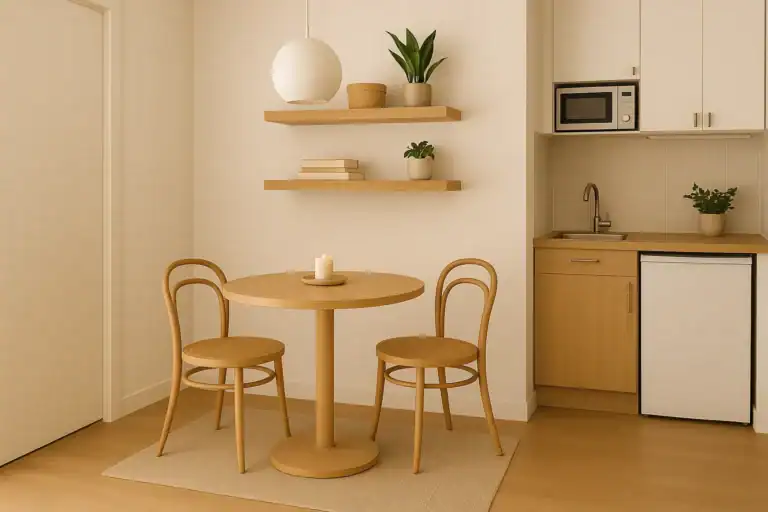
Multi-room routines for small homes are less about cleaning and more about flow. In compact spaces, rooms are never isolated. The kitchen affects the living room. The entryway influences the bedroom. One overloaded corner quietly spreads into the rest of the apartment.
Instead of fixing rooms individually, whole-home routines connect them. These gentle systems create rhythm across spaces so your home functions as one environment instead of a collection of problem zones.
This article explores seven routines that protect that rhythm without turning daily life into a project.
Why multi-room flow matters more than perfect rooms
Small homes reward continuity. When transitions between spaces are smooth, everything feels lighter. When transitions break, friction multiplies.
The mindset behind this approach connects closely to Smart Space Living: Practical Design Ideas for Small Spaces, where the focus is not perfection but sustainable daily living. Multi-room routines translate that philosophy into action.
You are designing movement, not just storage.
1. The morning reset loop
This routine links bedroom, bathroom, and kitchen into a single loop that takes under ten minutes.
- Make the bed
- Clear the sink
- Return night items to their zones
- Open a window or light source
The key is sequence. You move forward, not backtracking. The loop ends where the day begins.
This prevents clutter from multiplying before noon.
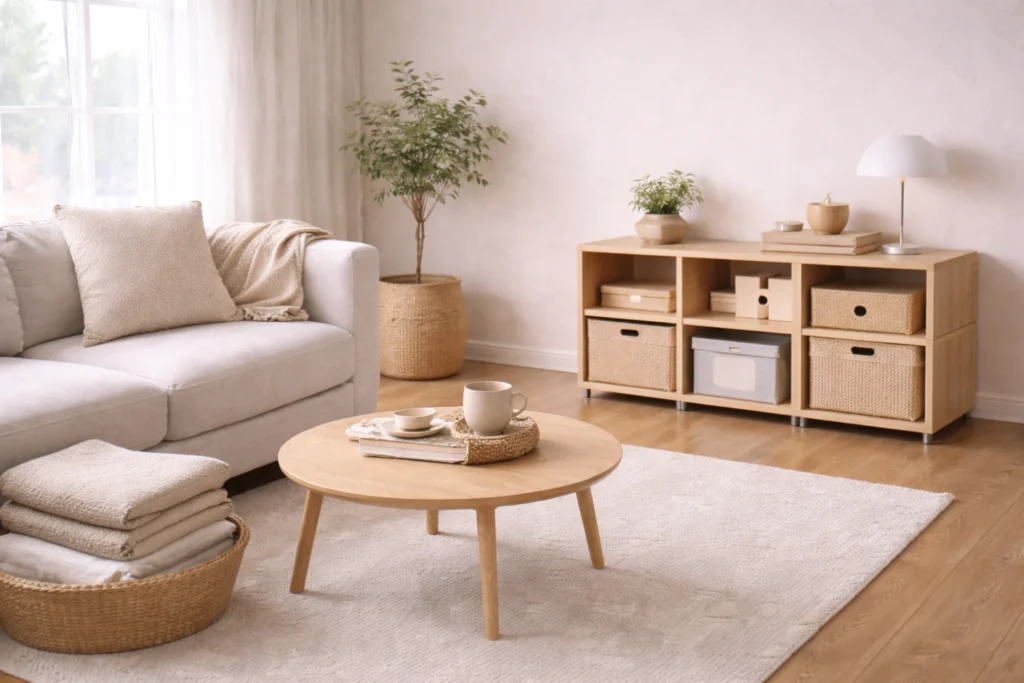
2. The soft clutter sweep
Soft clutter travels faster than hard clutter. Blankets, bags, clothing, mail, and textiles migrate silently.
Once each evening, sweep through shared zones and return soft items home. Storage systems that reduce friction, like those explained in Smart Drawer Organization Systems That Protect Small Spaces, make this sweep automatic instead of emotional.
You are not tidying. You are restoring boundaries.
3. The kitchen closing ritual
A closed kitchen signals the end of the day. Even in a studio apartment, this boundary changes the emotional tone of the space.
- Wipe counters
- Clear dishes
- Reset one prep surface
- Turn off overhead lights
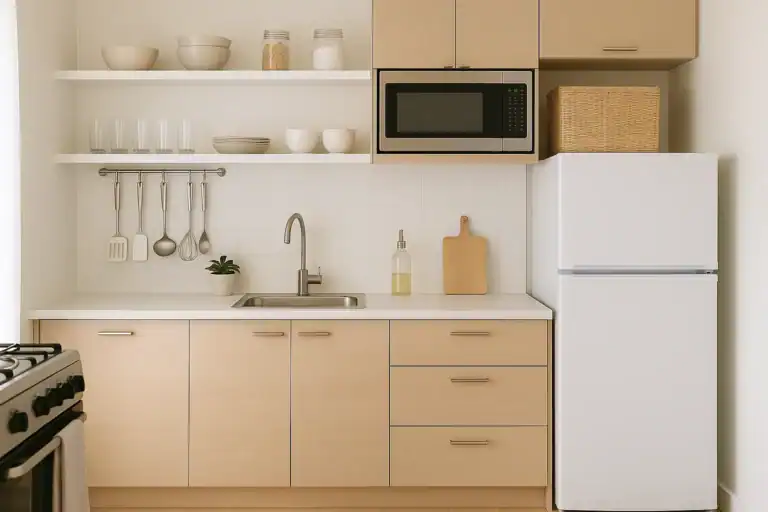
Implementation strategies from 8 Small Kitchen Organization Tips for Beginners help maintain this ritual without deep cleaning every night.
The kitchen does not need perfection. It needs closure.
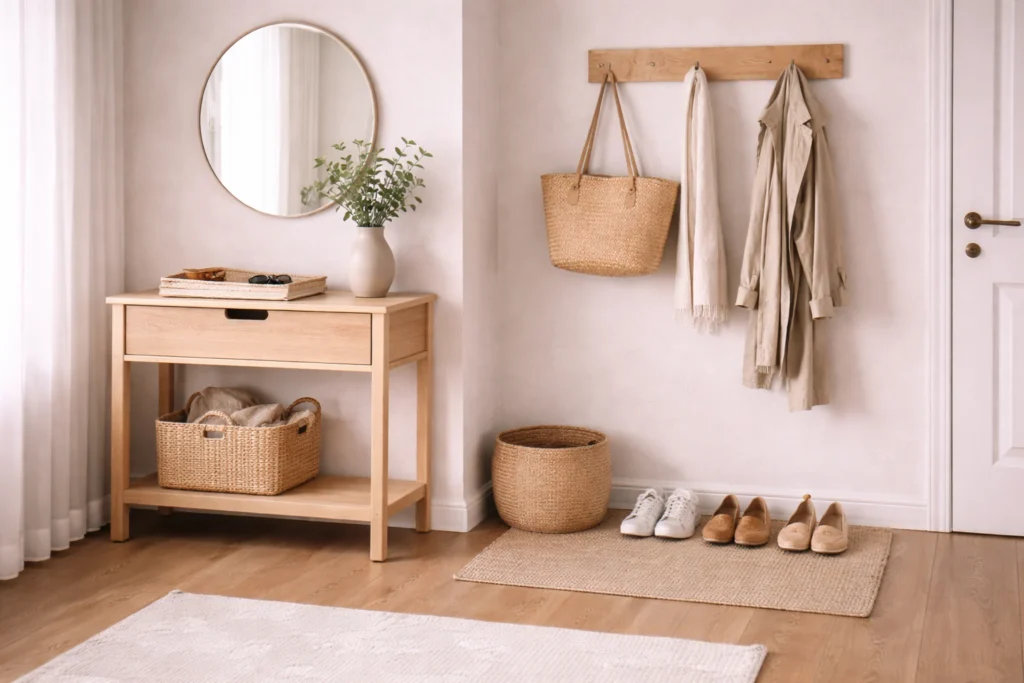
4. The entry transition checkpoint
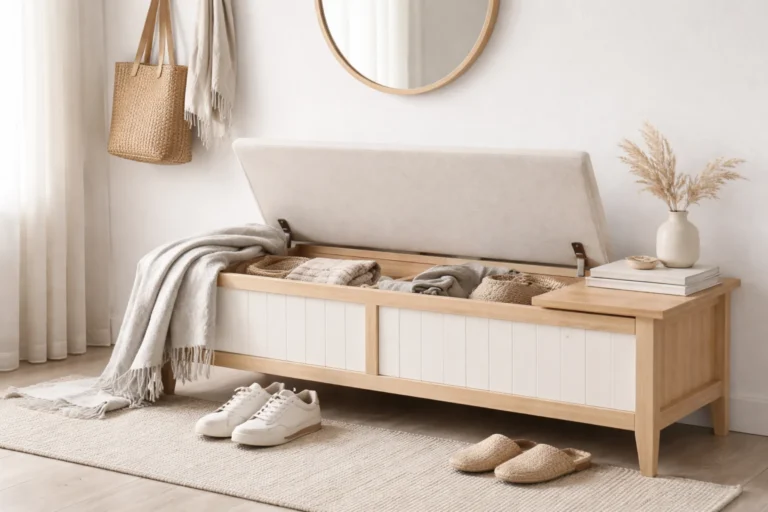
Entry zones carry emotional residue from the outside world. A two-minute checkpoint prevents that energy from spreading.
- Shoes aligned
- Bags returned
- Keys placed
- Mail sorted or stacked intentionally
This checkpoint reduces the invisible clutter that accumulates during busy weeks.
5. The five-surface rule
Every evening, choose five surfaces across the home and clear them. Not one room, not all rooms. Five surfaces.
- Table
- Desk
- Counter
- Nightstand
- Shelf
This distributes effort evenly and prevents overwhelm.
Small homes respond better to distributed maintenance than marathon cleaning sessions.
6. The weekend zone rotation
Instead of deep-cleaning the entire apartment, rotate focus weekly.
- Weekend A – kitchen + entry
- Weekend B – bedroom + closet
- Weekend C – living area + storage
This rhythm mirrors modular thinking found in Modular Storage Systems for Small Homes That Grow With You, where maintenance evolves instead of resetting from scratch.
You are maintaining balance, not chasing completion.
7. The nightly visual closure
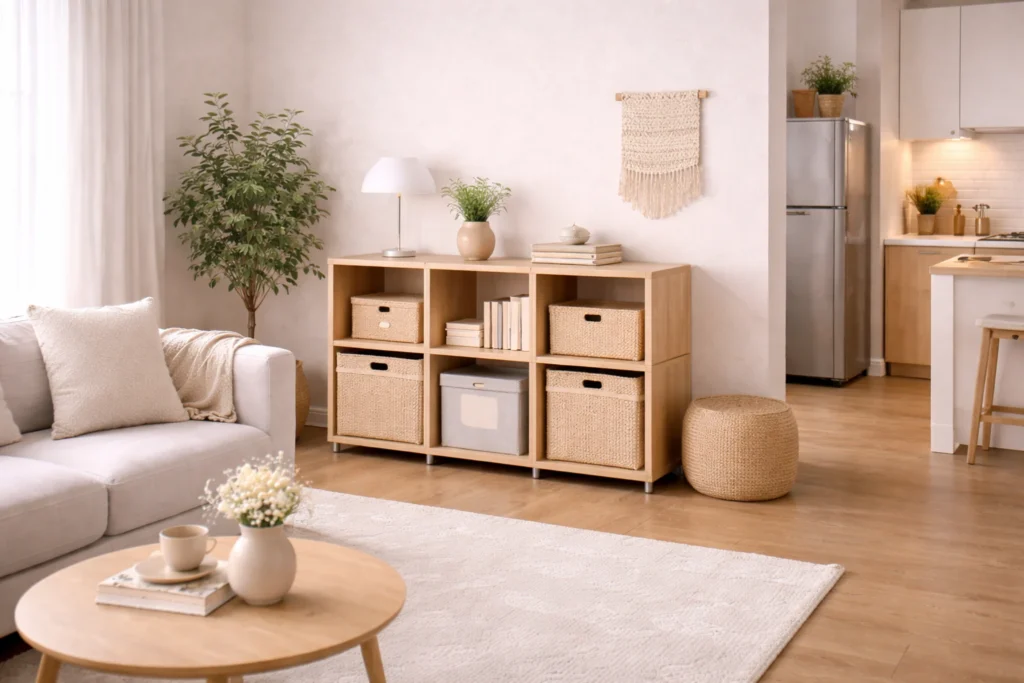
Before bed, stand in the center of your home and scan the space. Adjust anything visually loud.
- Fold
- Stack
- Align
- Dim lights
This is not cleaning. It is emotional closure.
IKEA offers many minimalist small space living inspirations that emphasize calm, clutter-free environments suitable for evening wind-down routines.
Visual quiet supports mental rest.
A home that moves with you
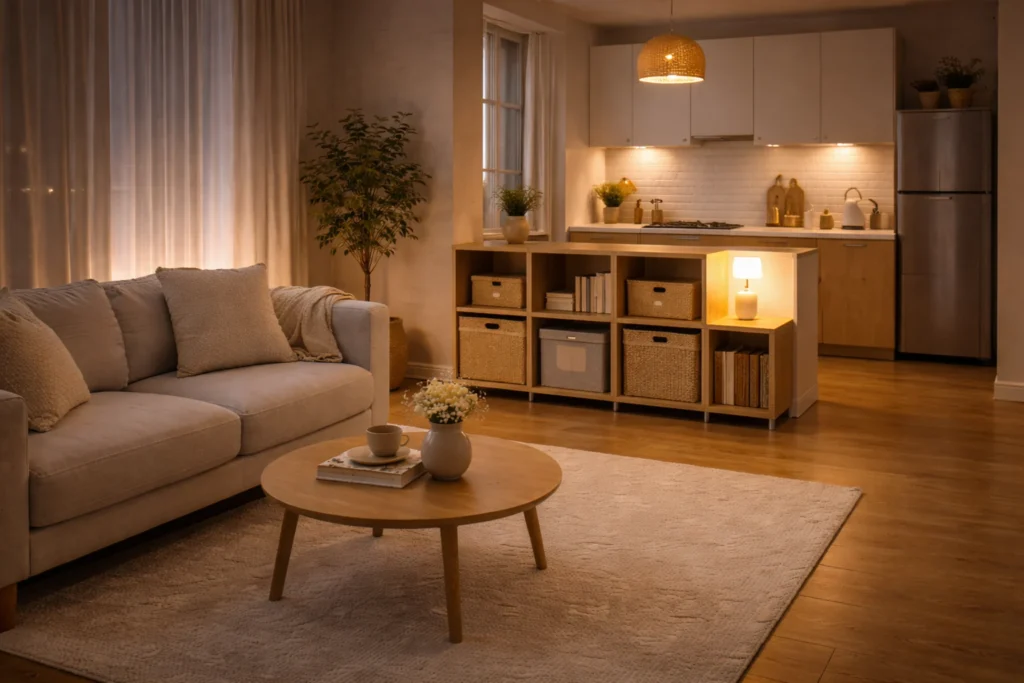
Multi-room routines for small homes are not about discipline. They are about cooperation. When spaces support each other, effort decreases and calm increases.
Instead of controlling every room, you guide the flow between them.
Over time, your home begins to feel less like a project and more like a rhythm.
And rhythm is what makes small spaces sustainable.