Modular Storage Systems for Small Homes That Grow With You
Modular storage systems for small homes are not about buying matching containers. They are about building a framework that evolves with your life instead of forcing you to reorganize every season.
In compact spaces, fixed storage eventually breaks. Needs change. Hobbies shift. Work patterns evolve. A modular system absorbs those changes quietly. It lets your home expand and contract without emotional friction.
This article focuses on the architecture behind storage, not just the tools.
What modular storage actually means in a small home
A modular system is not a product category. It is a philosophy combined with repeatable structure.
You design for change instead of designing for a single moment.
That means:
- Units that stack or separate
- Containers that migrate between rooms
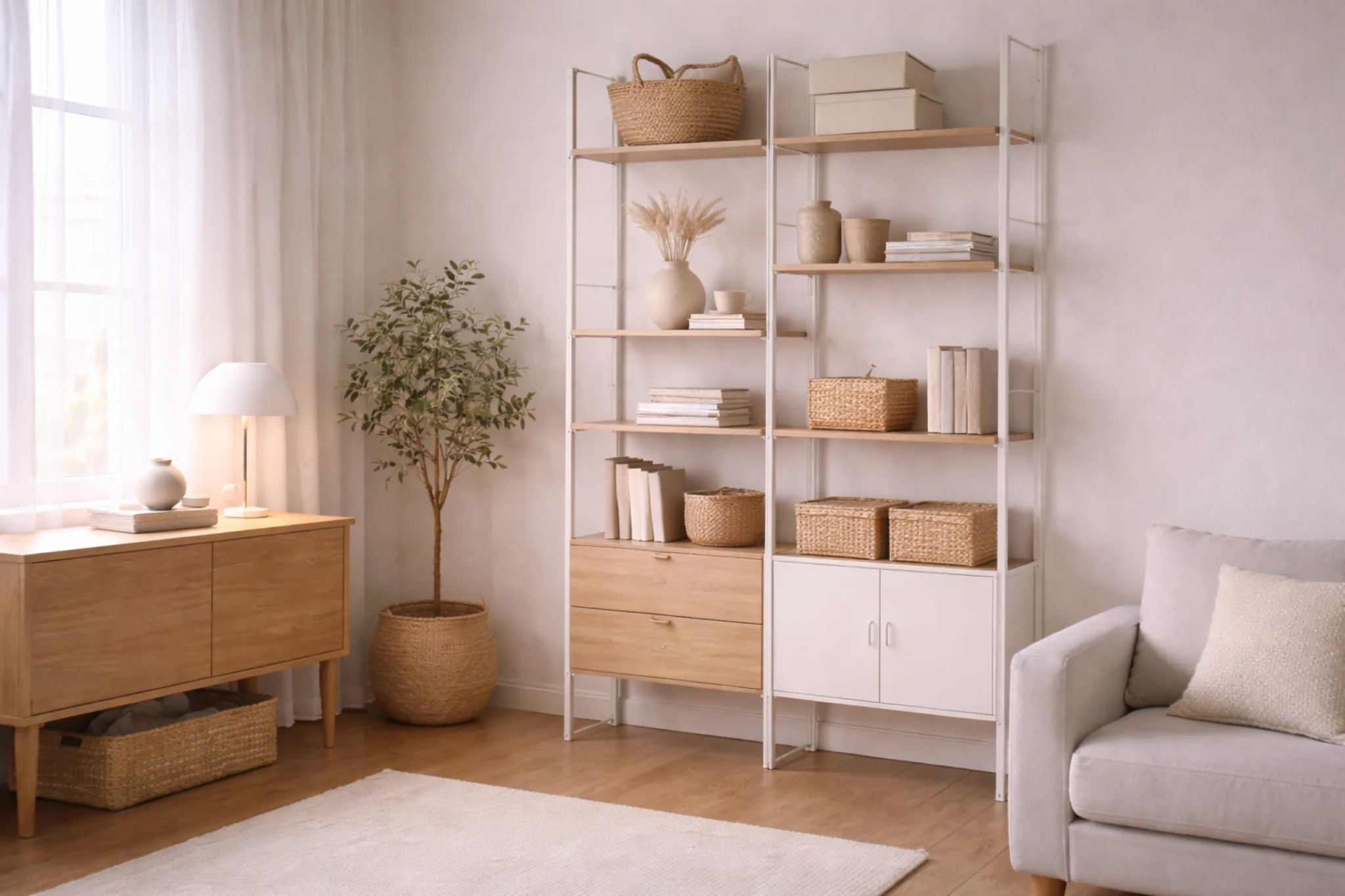
- Shelving that expands vertically
- Zones that flex without redesign
This layered thinking reflects the system approach explained in Storage & Organization That Actually Works for Small Spaces, where the goal is resilience instead of temporary order.
A modular system survives lifestyle shifts. Static storage does not.
The layered framework that prevents storage collapse
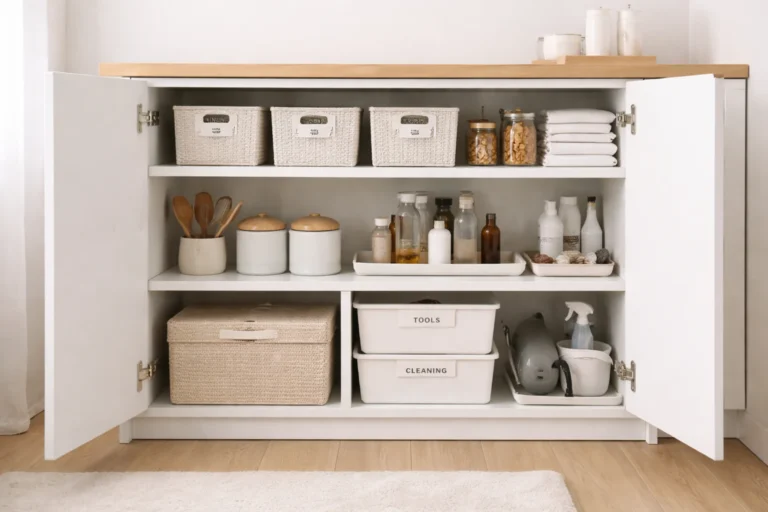
Most organizing advice sorts by category. Modular systems sort by layers of access.
Layer 1 – daily essentials
Layer 2 – weekly rotation
Layer 3 – seasonal or backup items
When life changes, you adjust a layer, not the entire structure.
This is why modular systems feel calmer. You are editing zones, not tearing down rooms.
Vertical adaptability is the hidden advantage
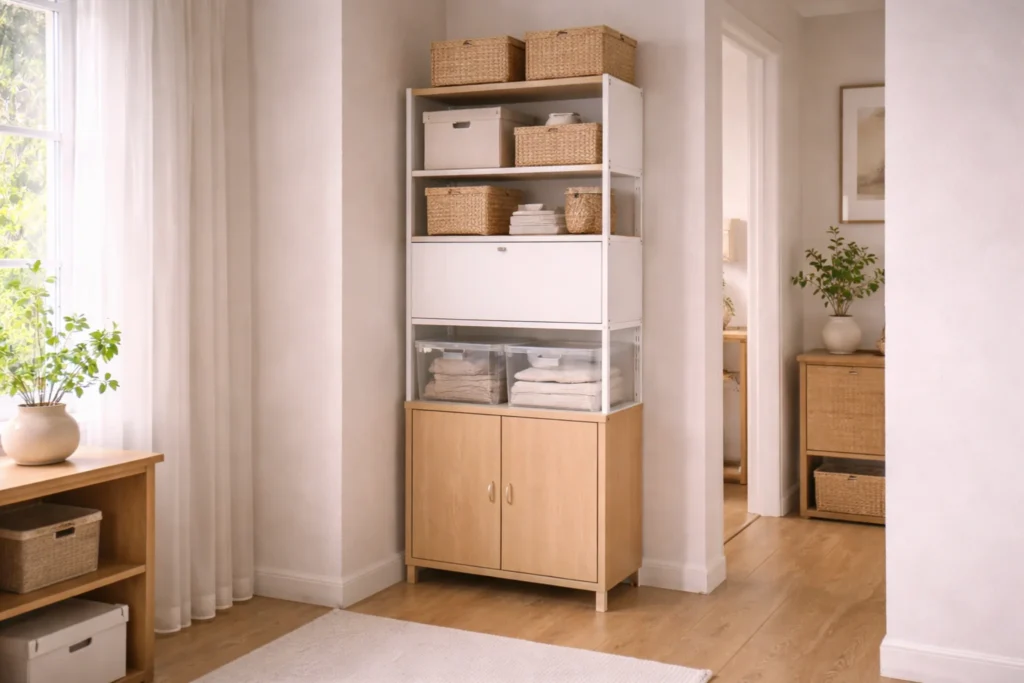
Small homes rarely run out of floor space first. They run out of flexible vertical structure.
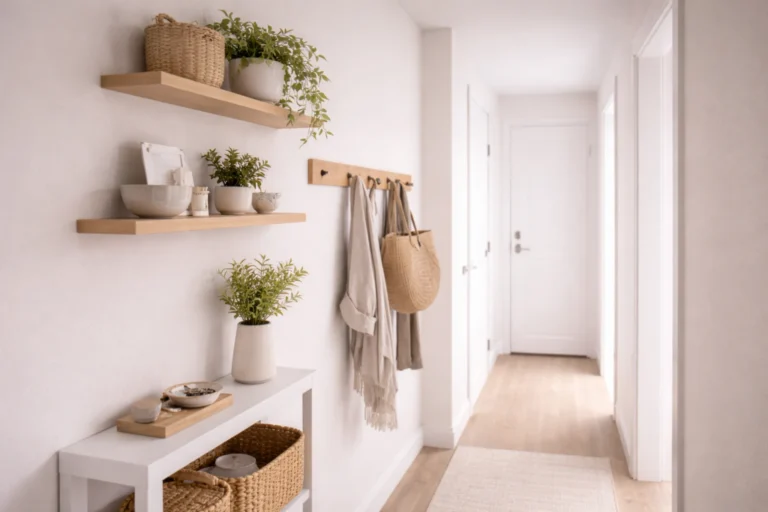
Adjustable shelving, stackable bins, and expandable racks allow storage to grow upward without adding furniture. This prevents the slow creep of bulky pieces that make a space feel crowded.
IKEA’s modular shelving philosophy is a good real-world example. Their systems are designed to reposition shelves without tools, allowing the structure to change as your needs change.
Adaptability reduces the need for replacement. Replacement creates clutter.
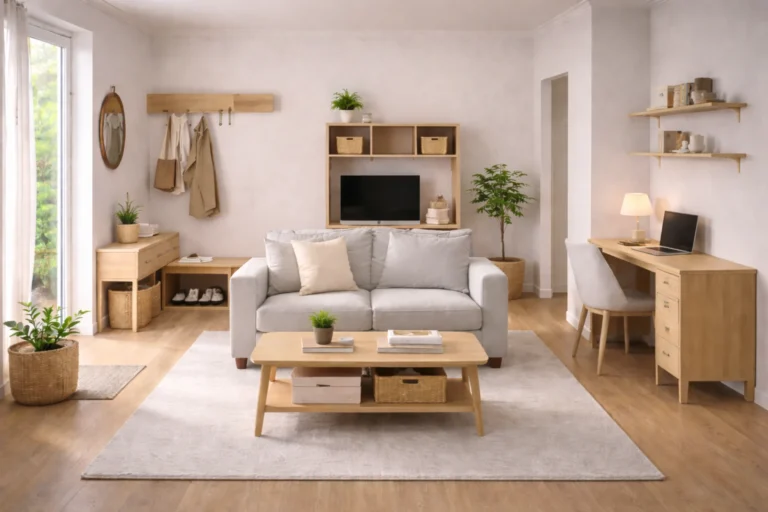
Designing storage by zones, not rooms
Rooms are architectural boundaries. Zones are behavioral ones.
Modular storage works best when built around behavior.
Closet zone
Closets benefit from interchangeable modules instead of fixed rods. Stackable cubes, removable bins, and adjustable hang space allow wardrobes to change without structural edits.
Implementation examples appear in Small Closet Organization Ideas for Beginners, where modular thinking prevents seasonal overflow instead of reacting to it.
Kitchen zone
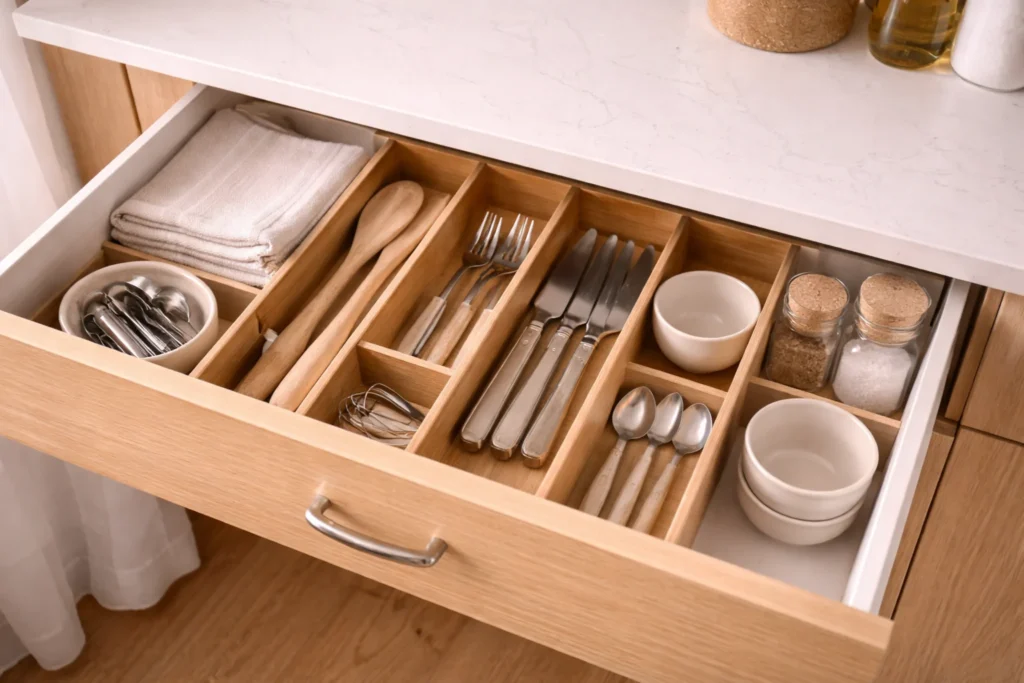
Kitchens evolve constantly. Appliances rotate. Cooking habits shift. A modular kitchen adapts instead of bottlenecking.
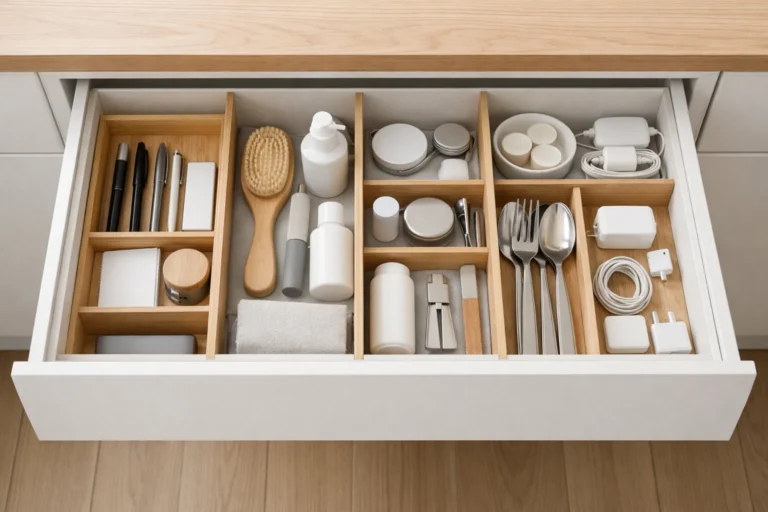
Drawer dividers that slide, shelf risers that stack, and bins that migrate between cabinets keep flow intact. Practical examples are demonstrated in 8 Small Kitchen Organization Tips for Beginners, where modular pieces support real cooking routines.
A system that grows instead of resets
The strength of modular storage systems for small homes is future-proofing.
A resilient system answers three questions:
- Can this expand without new furniture
- Can it shrink without leaving dead space
- Can components migrate to another room
If yes, your system is adaptive.
You are not organizing once. You are building infrastructure.
Budget-friendly modular thinking
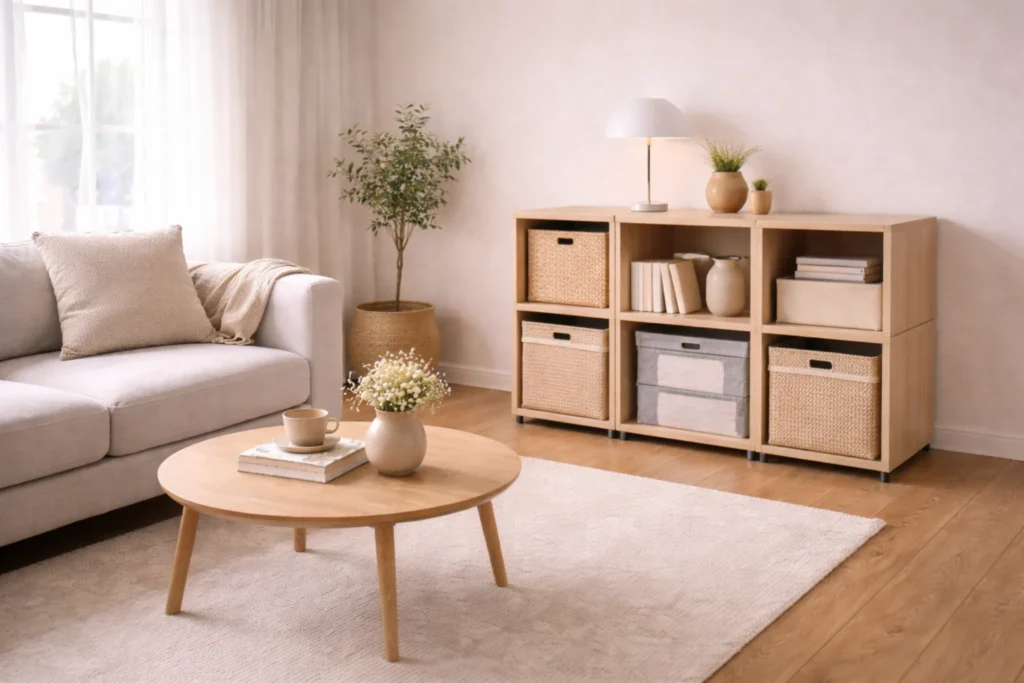
Modular does not mean premium. It means interchangeable.
Affordable modular tools include:
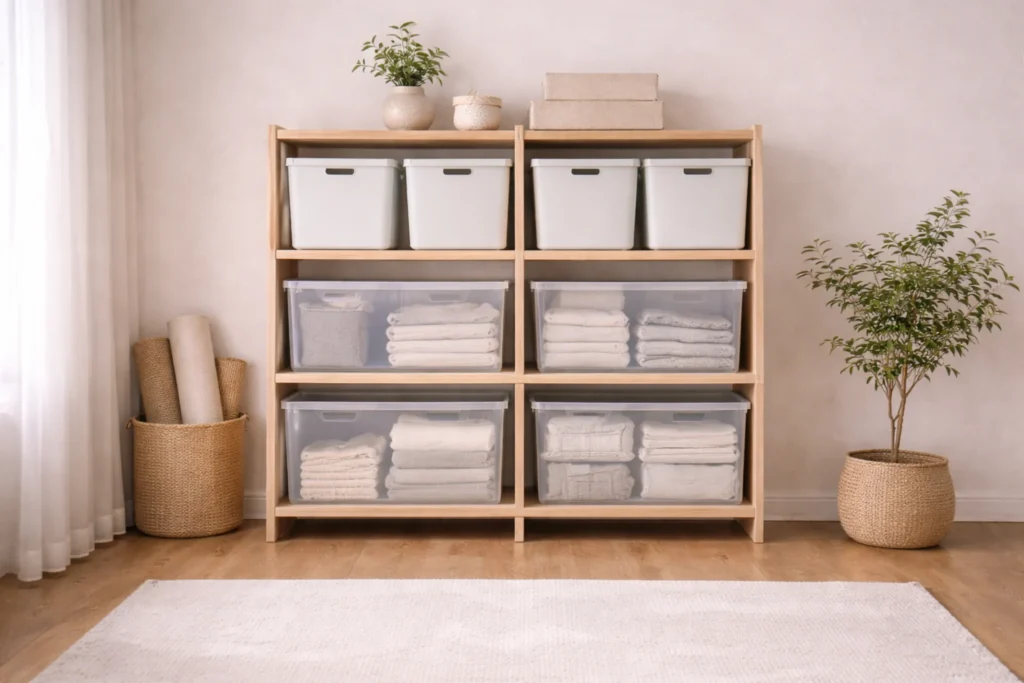
- Stackable open bins
- Adjustable tension shelving
- Fabric cubes
- Repositionable dividers
- Multi-use baskets
The value comes from movement. When objects migrate, your system stays alive.
Static storage traps clutter. Modular storage absorbs change.
A quieter relationship with storage
The emotional benefit of modular storage systems for small homes is subtle. Your home stops fighting you.
Instead of purging under pressure, you adjust gently. Instead of redesigning rooms, you reposition components. The environment becomes cooperative.
Good storage disappears into the background. When it works, you notice your life, not your containers.
And that is the real measure of a successful system.