Smart Drawer Organization Systems That Protect Small Spaces
A drawer organization system can quietly transform how a small home functions. Drawers are often treated as catch-all zones where useful items disappear into clutter, especially in compact spaces where every inch matters. When drawers are structured intentionally, they become micro-storage engines that protect order across the entire home.
This guide focuses on systems, not products. The goal is to build a repeatable framework that works in kitchens, bedrooms, entryways, and bathrooms without requiring expensive upgrades.
Why Drawers Fail Without a System
Most drawers fail because they are treated as containers instead of zones. A strong drawer organization system begins with the idea that every drawer should behave like a tiny room with defined functions.
Instead of thinking:
What fits here?
Ask:
What belongs here permanently?
This mindset shift mirrors the zoning principles explained in Smart Space Living: Practical Design Ideas for Small Spaces, where intentional structure prevents clutter before it starts.
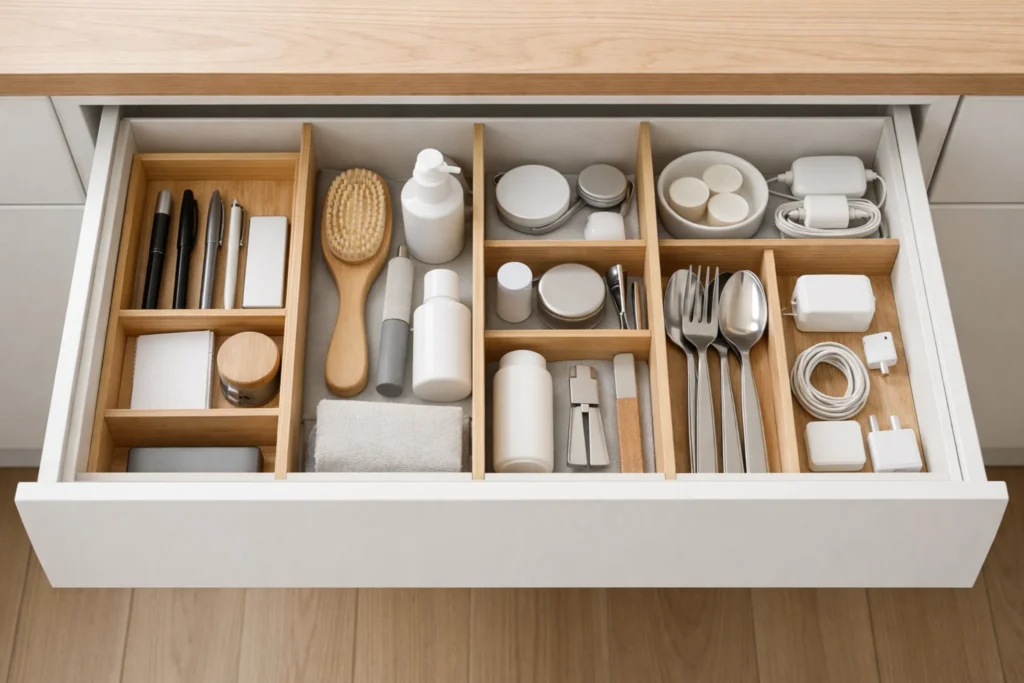
Build Drawer Zones Before Adding Containers
The mistake many people make is buying organizers first. Containers should support zones, not create them.
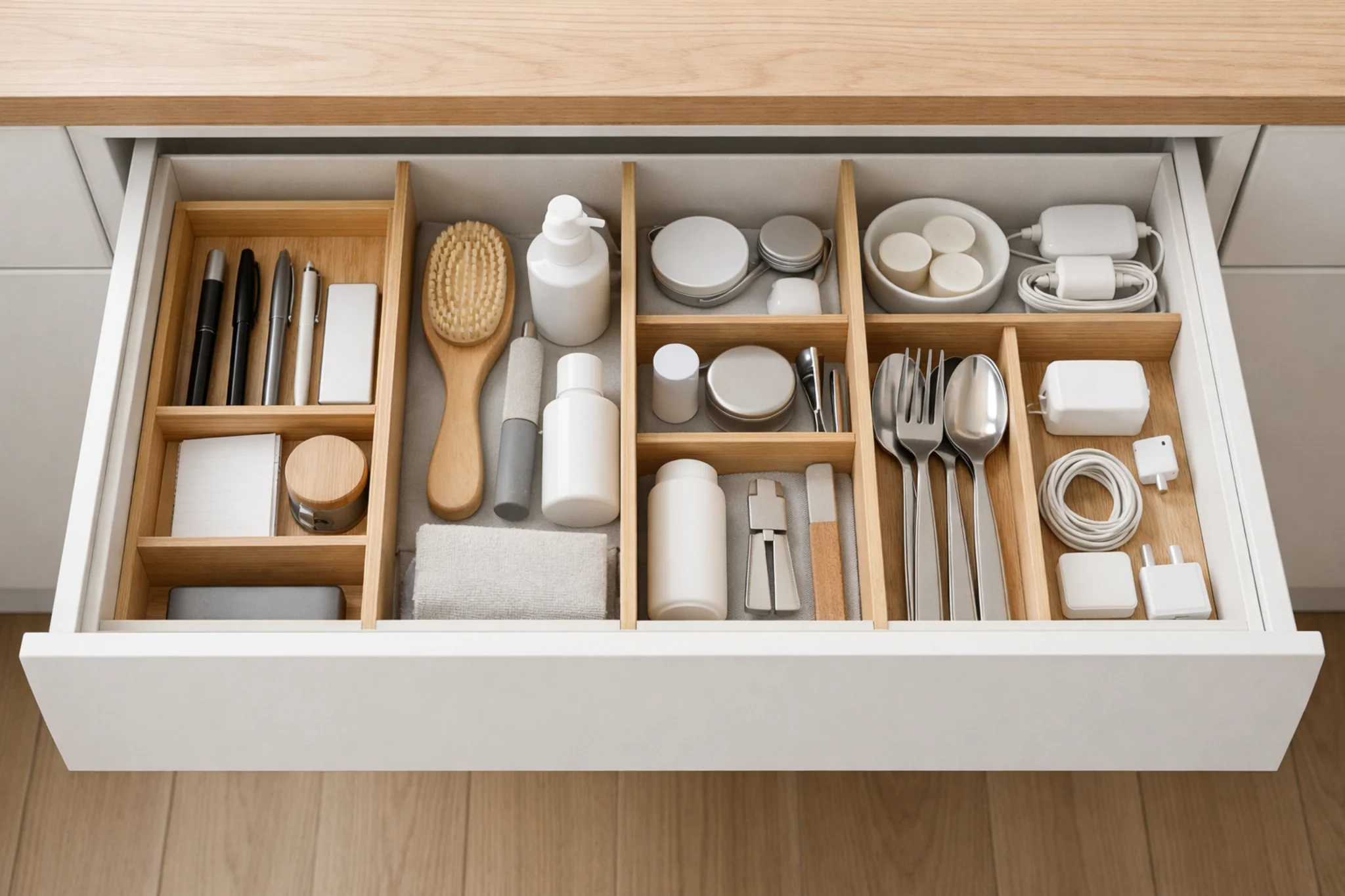
A repeatable drawer organization system follows three steps:
Step 1 – Category compression
Group items by purpose, not size. For example:
- writing tools
- daily grooming items
- cooking utensils
- charging accessories
Each group must earn its drawer space.
Step 2 – Frequency ranking
Items used daily live in prime zones. Rare-use items move outward.
This prevents drawer overcrowding and protects daily flow, a principle also applied in entryway systems like those shown in Narrow Hallway Storage Ideas.
Step 3 – Container alignment
Only after zoning should you introduce trays or dividers.
The Micro-Drawer Rule for Small Homes
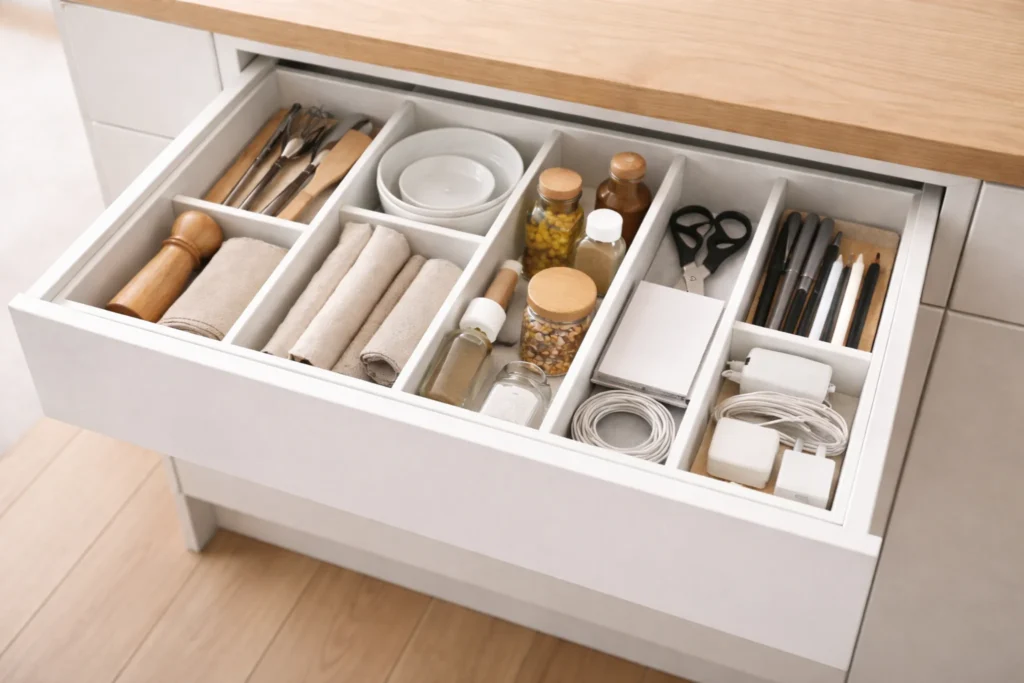
Small spaces demand micro-efficiency. One powerful drawer organization system rule is:
One drawer = one purpose.
Mixed-purpose drawers decay quickly. When drawers carry multiple identities, clutter wins.
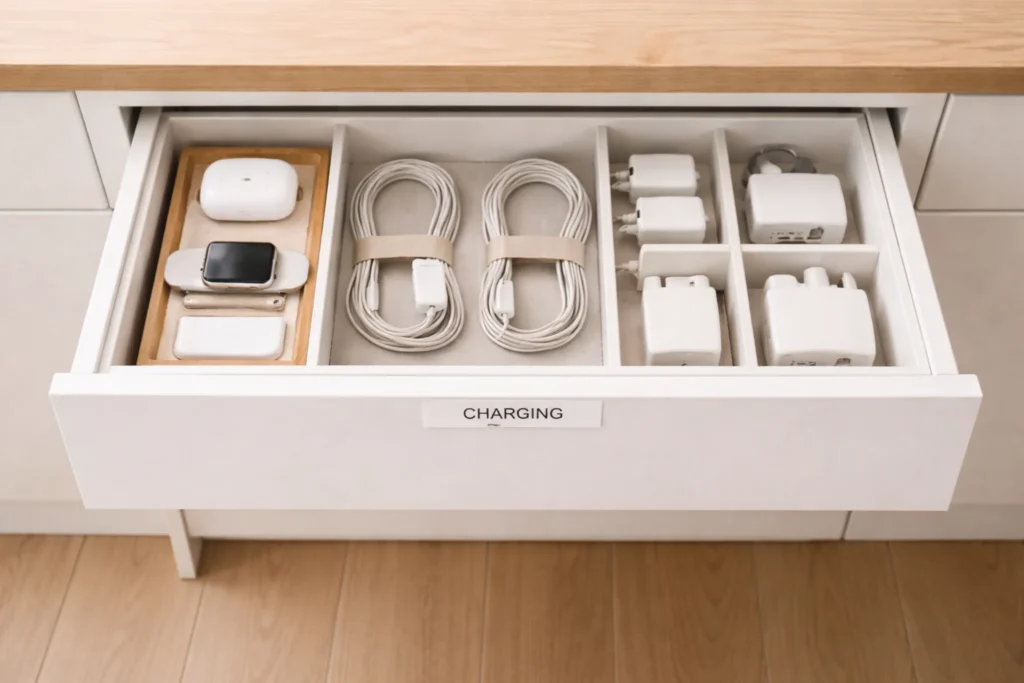
Examples of strong drawer identities:
- charging station drawer
- daily essentials drawer
- paperwork intake drawer
- cooking prep drawer
This same zone discipline appears in real room layouts where drawers support movement and flow. You can see this applied clearly in Compact Laundry Room Ideas.
Use Shallow Layers to Prevent Drawer Collapse
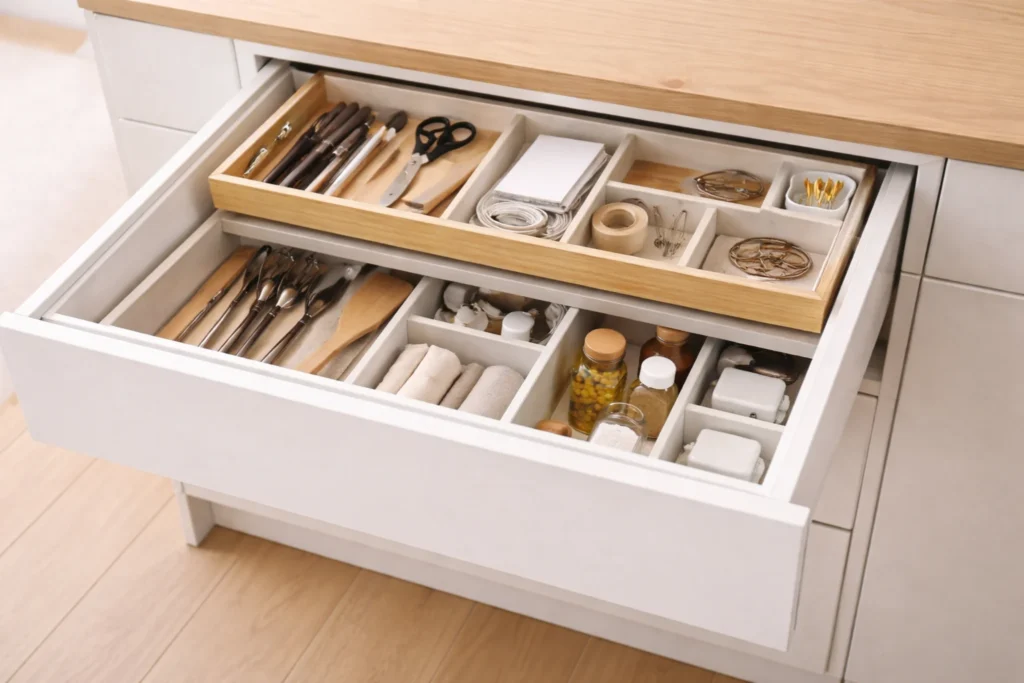
Deep drawers invite stacking, and stacking invites chaos. A smart drawer organization system uses shallow layers instead of piles.
Solutions include:
- stacking trays with lift-out layers
- slim inserts
- sliding dividers
- shallow compartment boxes
IKEA offers modular drawer trays designed specifically for shallow layering, which helps prevent vertical clutter in compact furniture.
Maintenance Is Built Into the System
A drawer organization system is not complete without a reset rhythm. Drawers degrade slowly, not suddenly. A five-minute monthly reset protects the structure.
Maintenance checklist:
- remove drift items
- realign containers
- wipe surfaces
- reassess categories
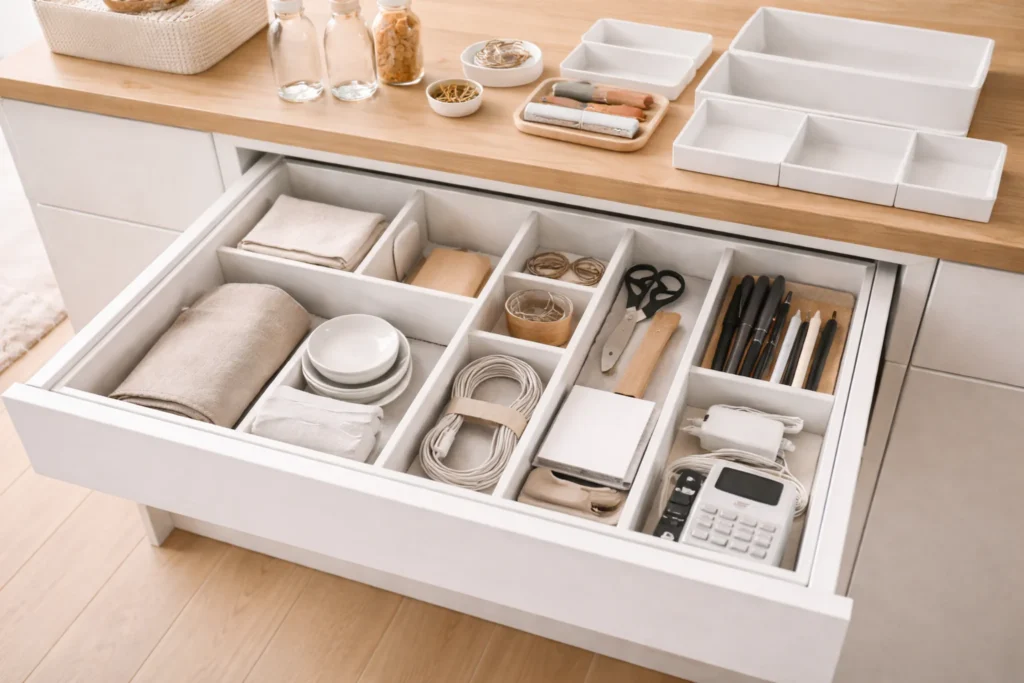
Drawers as Infrastructure, Not Decoration
In small homes, drawers are not aesthetic extras. They are infrastructure. When drawers work, counters stay clear, closets stay lighter, and surfaces stay breathable.
A consistent drawer organization system quietly supports every other storage decision in the home. It is one of the highest-impact upgrades you can make without buying new furniture.
Drawers do not need to look impressive. They need to behave predictably. Predictability is what creates calm in compact living.
A Small System With Large Ripple Effects
When drawer systems are stable, the rest of the home becomes easier to manage. Small upgrades compound. A structured drawer becomes a reliable anchor in daily routines, reducing friction and decision fatigue.
In compact homes, the smallest systems often carry the biggest weight. Drawers are proof that invisible organization can shape visible calm.