Space-Smart Zoned Storage Systems for Small Homes That Reduce Clutter
Zoned storage systems for small homes offer a more natural way to stay organized without relying on constant tidying. Instead of adding more storage, this approach focuses on placing items where they are actually used.
In compact spaces, clutter often builds not because there is not enough storage, but because storage is not aligned with daily habits. When everything has a clear, logical place, maintaining order becomes easier and far less overwhelming.
What Zoned Storage Systems for Small Homes Actually Mean
Zoned storage systems for small homes are built around a simple principle. Every part of your home supports a specific activity, and storage should reflect that.
Rather than grouping items by category alone, zoning organizes them by use and location.
For example:
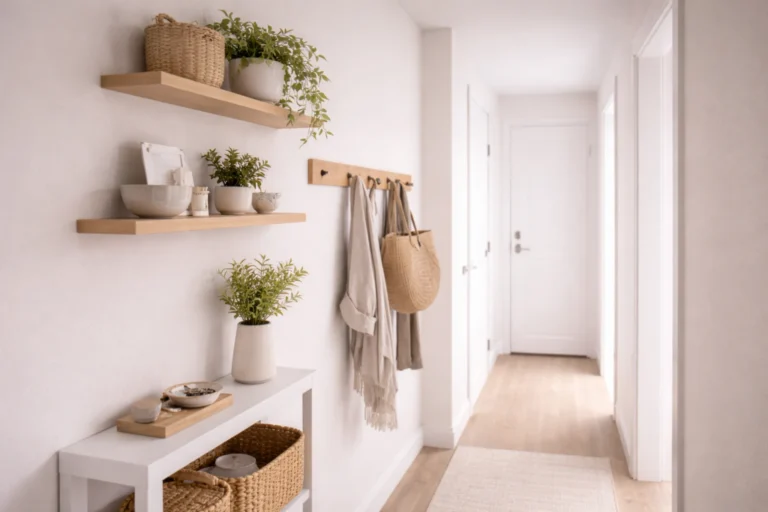
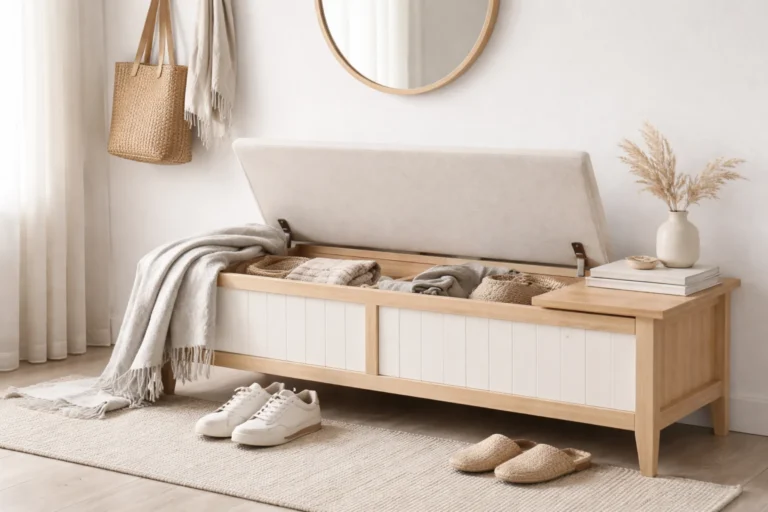
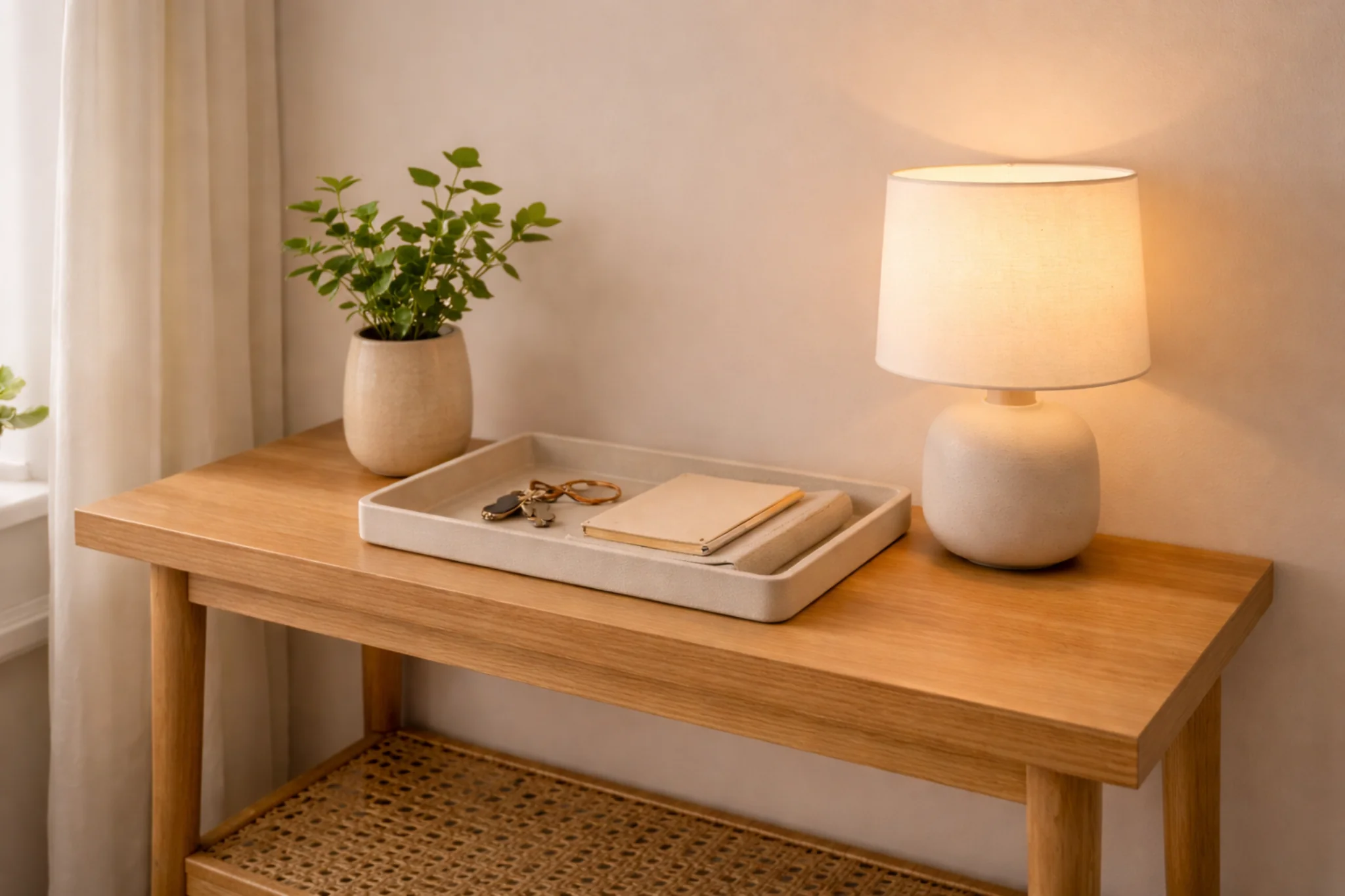
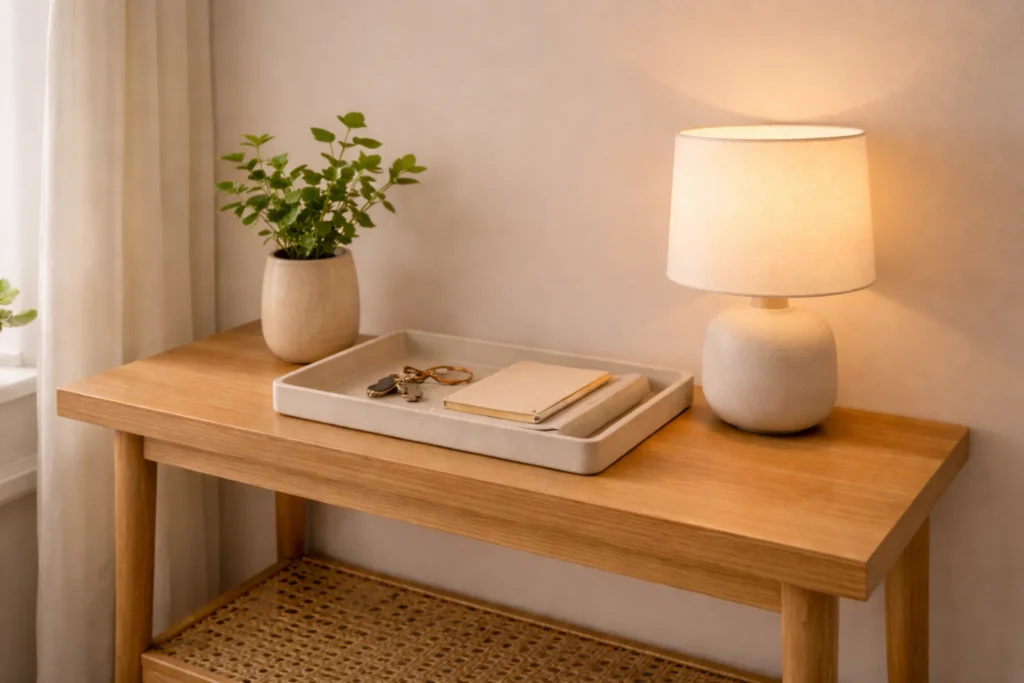
- an entry zone for keys and everyday essentials
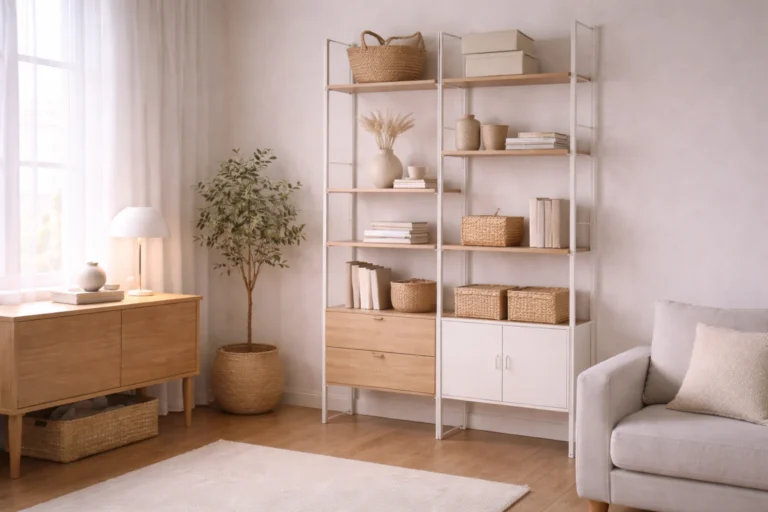
- a living room zone for relaxation and minimal surfaces
- a kitchen zone for frequently used tools
This approach builds on the idea of storage and organization that actually works, where each item has a clear purpose and place.
Why Zoned Storage Systems Reduce Daily Clutter
When storage matches how you move through your home, cleanup becomes more intuitive.
Instead of deciding where things should go, your home quietly guides you.
Zoned storage systems for small homes help reduce:
- decision fatigue
- misplaced items
- visual clutter
Over time, this creates a rhythm similar to maintaining a calm daily reset routine for small homes, where small habits keep everything manageable.
How to Create Micro-Zones in Small Spaces
Small homes rarely have clearly separated rooms, which is why micro-zones are so effective.
Living Room Zones
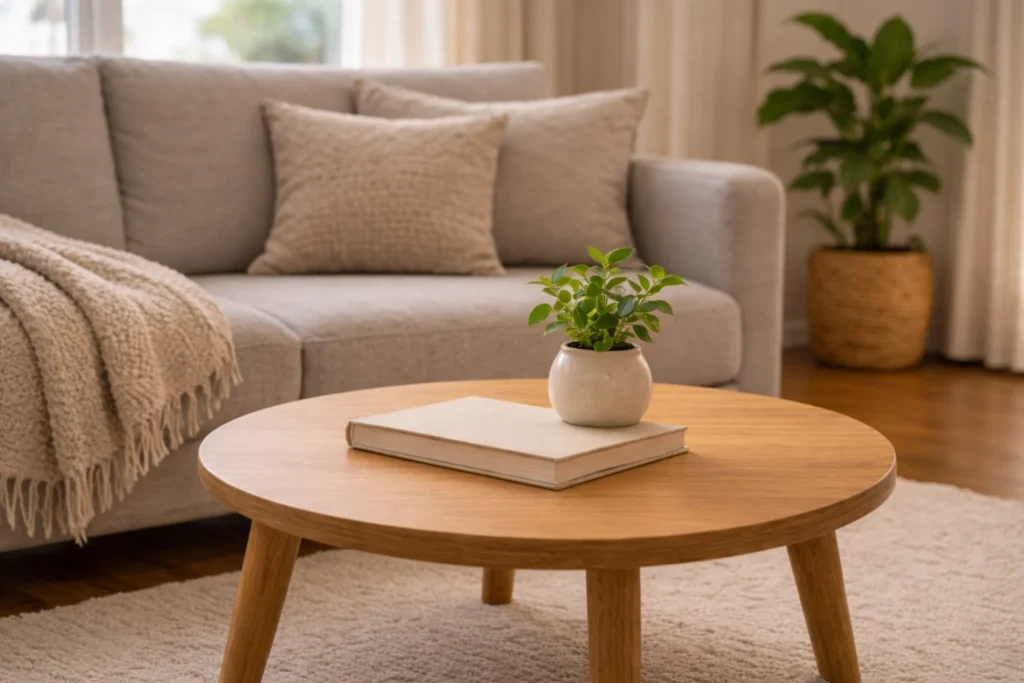
Even a compact living room can support multiple functions with the right structure.
You might create:
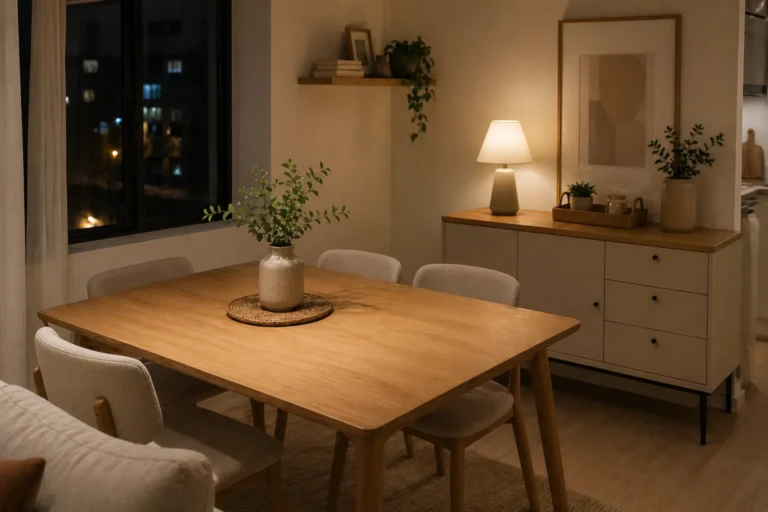
- a seating zone with minimal surfaces
- a media zone with hidden storage
- a small corner for reading or relaxing
These layouts work especially well with simple small living room furniture ideas that keep spaces open and easy to maintain.
Kitchen Zones
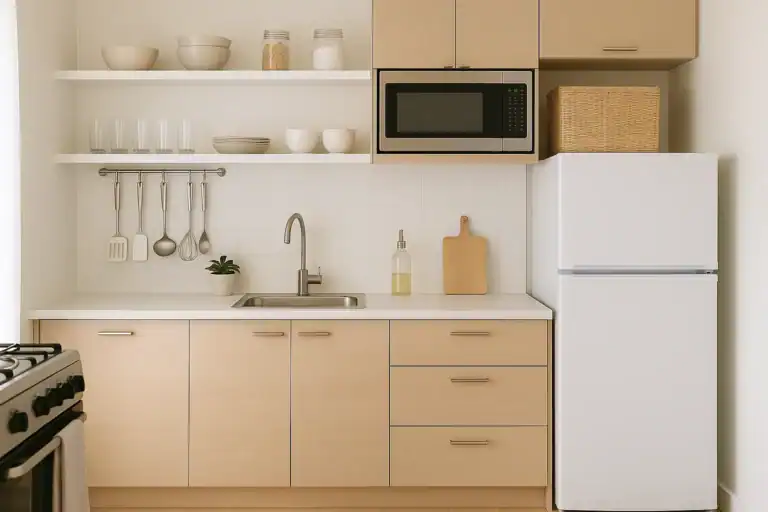
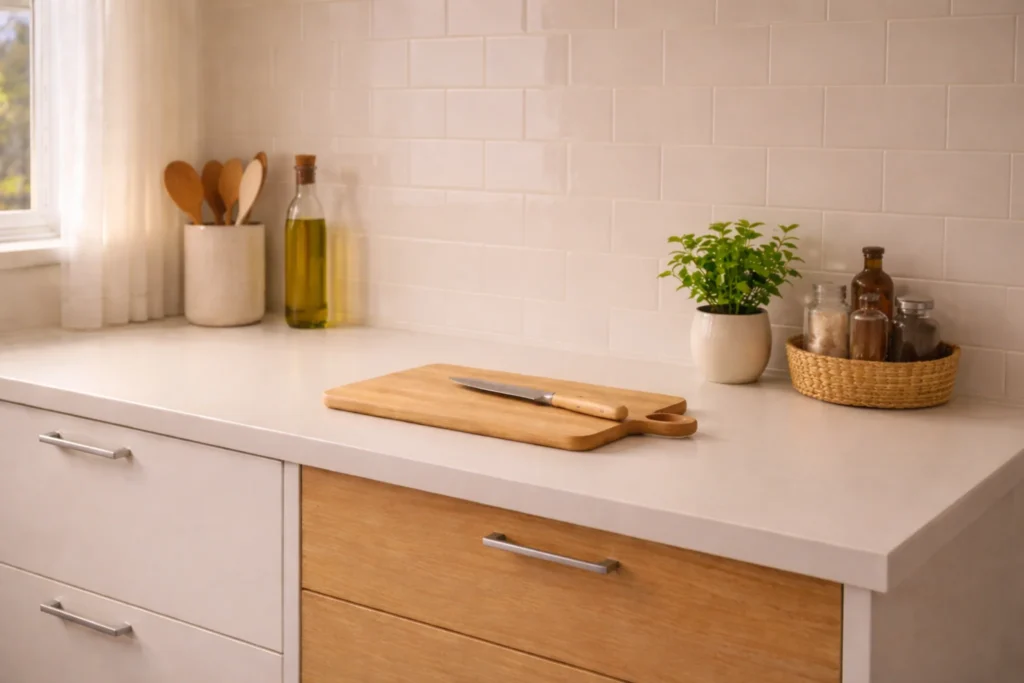
In smaller kitchens, zoning is less about space and more about smart placement.
Group items by how often they are used:
- daily tools near prep areas
- occasional items stored higher or further away
This reduces friction and helps maintain a cleaner surface throughout the day.
Bathroom Zones
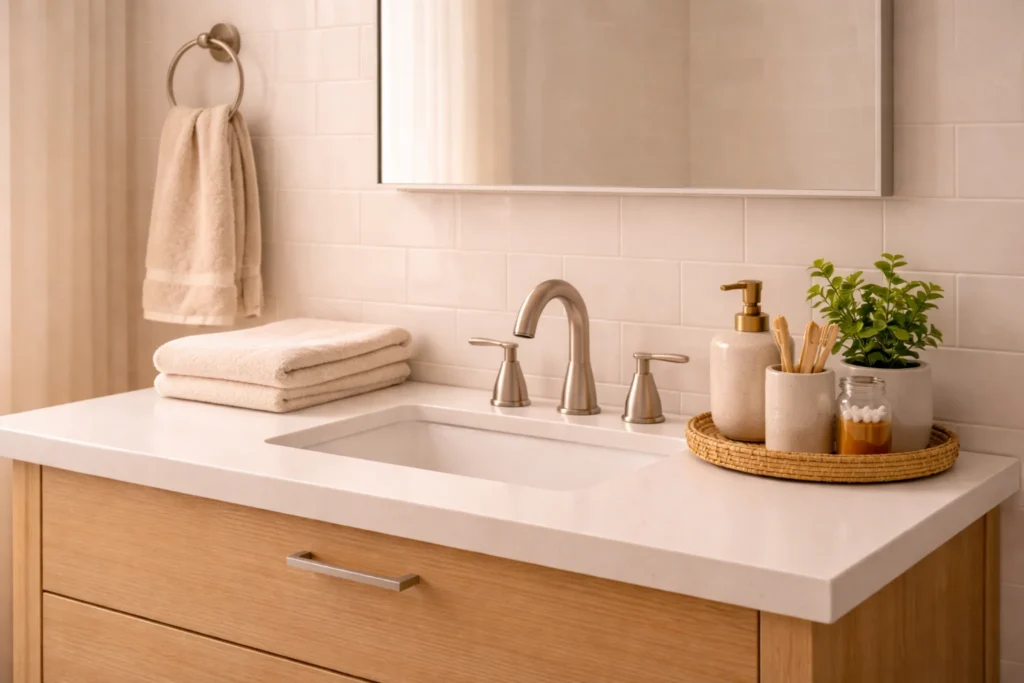
Bathrooms benefit from clear, compact zones.
You might include:
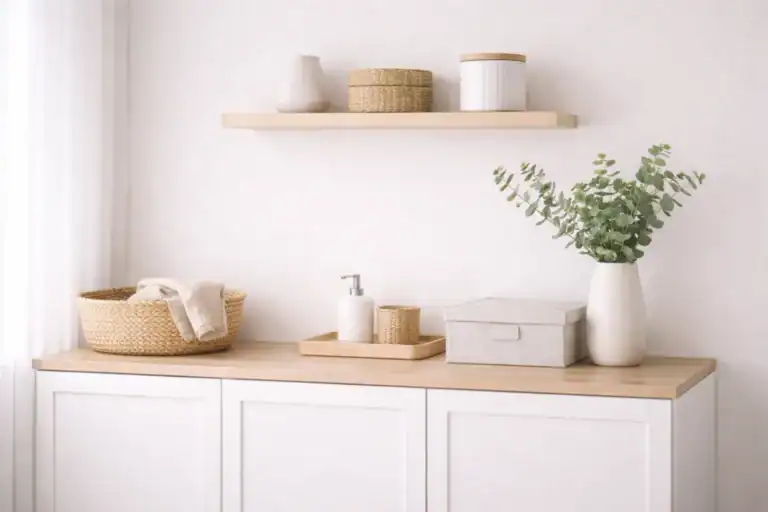
- a daily essentials zone near the sink
- a backup storage zone for extra supplies
- a small visual reset area with minimal items
This approach is often reflected in space-smart bathroom furniture layouts that maximize vertical and narrow storage.
Common Zoning Mistakes That Create Clutter
Even simple systems can become ineffective if zoning is not intentional.
Creating zones without purpose
Each zone should support a real daily activity.
Overloading each zone
Too many items in one area quickly create visual noise.
Ignoring natural habits
If storage does not match how you actually use your space, it will not last.
How to Build Zoned Storage Systems in One Afternoon
You do not need a full redesign to make zoning work.
Start with small adjustments.
Step 1: Observe your daily flow
Notice where clutter naturally collects. These areas often indicate missing zones.
Step 2: Define a few key zones
Focus on the spaces you use most often.
Step 3: Assign simple storage tools
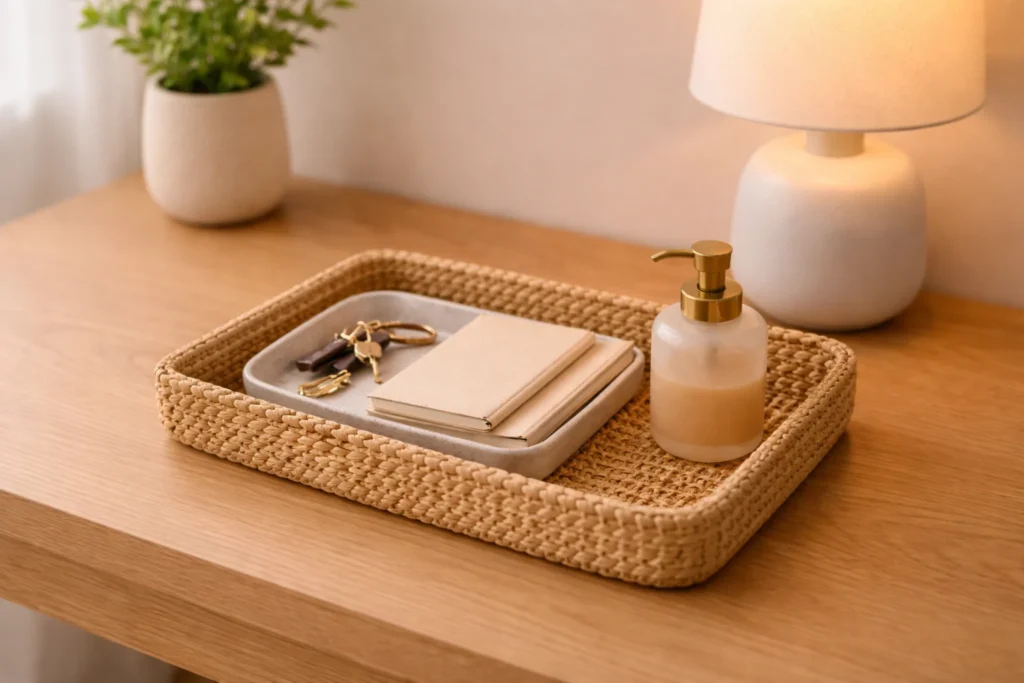
Use trays, baskets, or containers to define each zone.
If needed, simple options from Wayfair storage and organization collections can help create structure without adding visual clutter.
A System That Works Quietly in the Background
Zoned storage systems for small homes are not about perfection. They are about making everyday life easier.
When storage aligns with your habits, maintaining order becomes something you do without thinking. Surfaces stay clearer, items return to their place more naturally, and the home feels less overwhelming.
Over time, these small shifts create a space that feels calm, functional, and ready for daily life without constant effort.