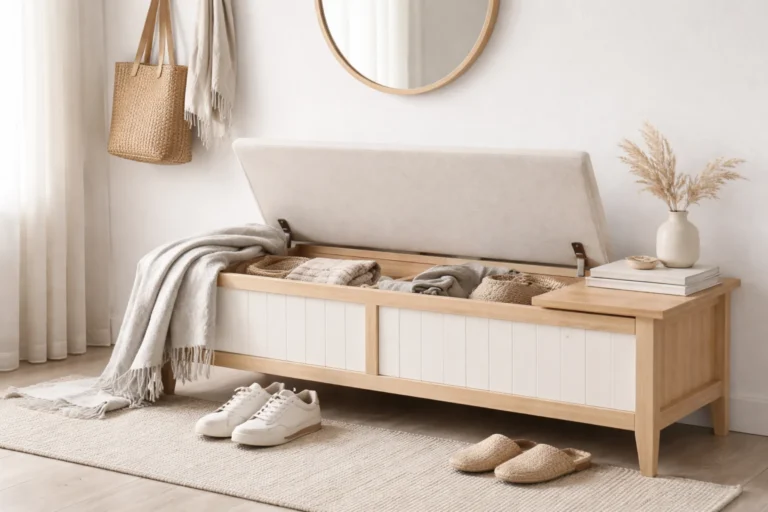
Small Space Storage Systems That Quietly Transform Daily Living
Small space storage systems are not about squeezing more stuff into tight corners. They are about building invisible structure so your home stops fighting you.
In compact homes, clutter is rarely a storage problem. It is a systems problem. When objects do not have predictable landing zones, they migrate. Surfaces fill. Drawers overflow. The space feels smaller than it actually is.
The goal here is not perfection. It is rhythm. A home that resets itself with minimal effort.
Why Small Space Storage Systems Matter More Than Containers
Buying bins without a plan is decoration disguised as organization. A real system answers three questions:
- Where does this live?
- How fast can I return it?
- Does this space match how I actually behave?
In the philosophy of smart space living principles, your environment should reduce friction, not add rules. Storage systems succeed when they feel natural, not forced.
If returning an item takes more than a few seconds, the system will quietly fail.
The Three-Zone Framework for Compact Homes
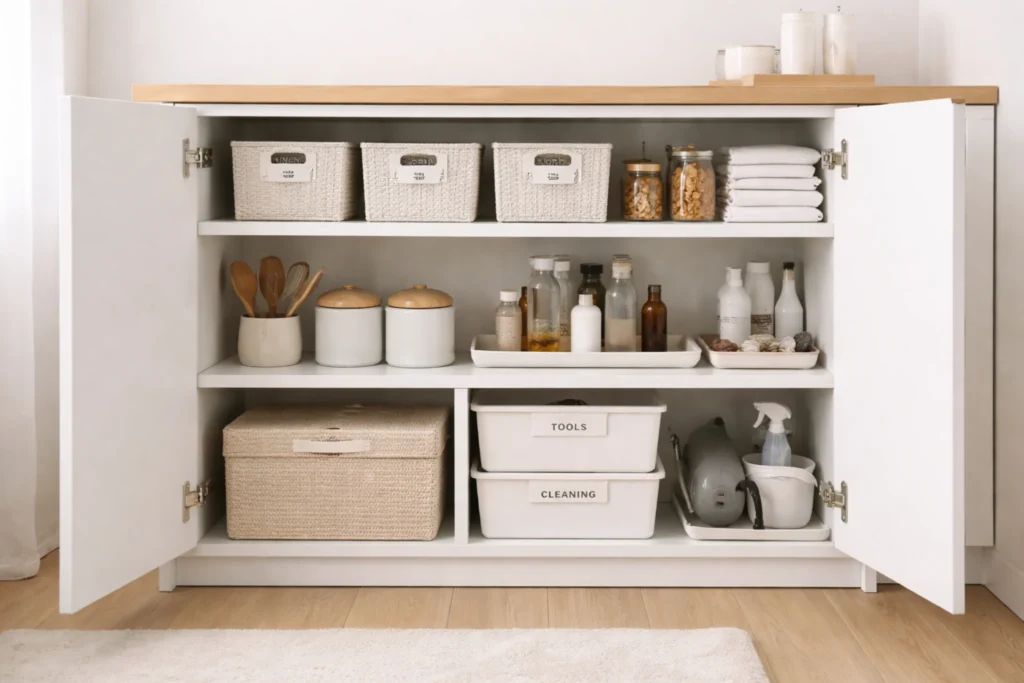
Zone 1 – Immediate Reach
This is arm’s length storage. Daily tools. Repeat-use items. Nothing aspirational.
Think:
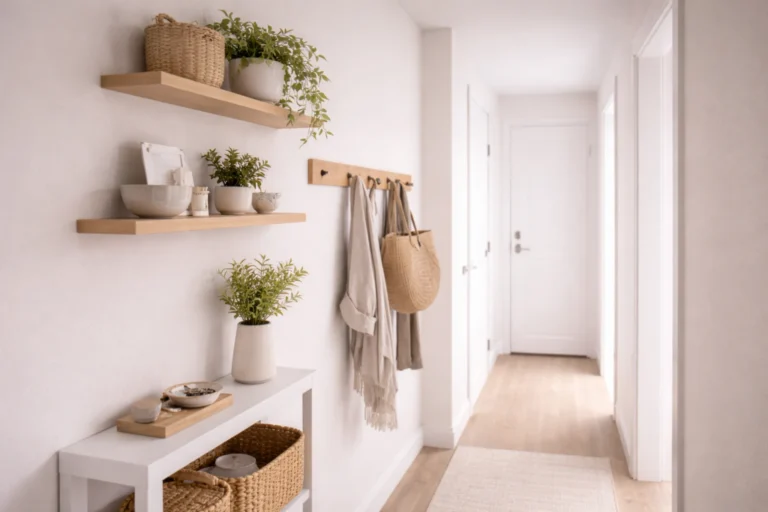
- entry hooks
- top drawers
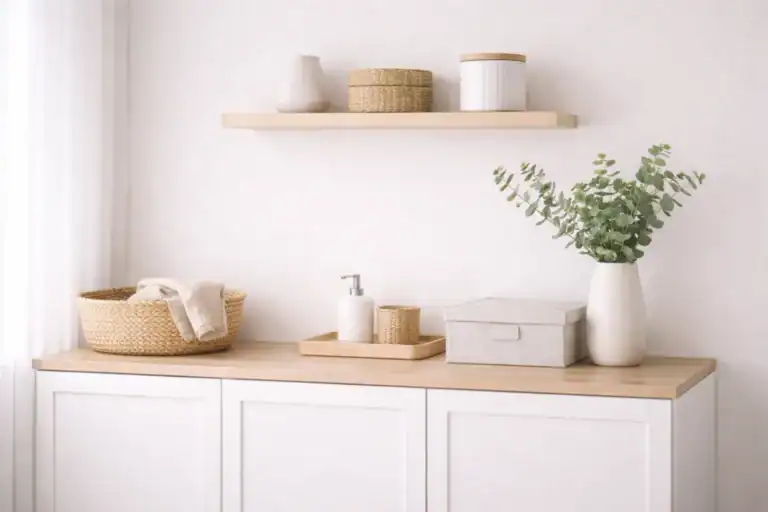
- countertop caddies
- open trays
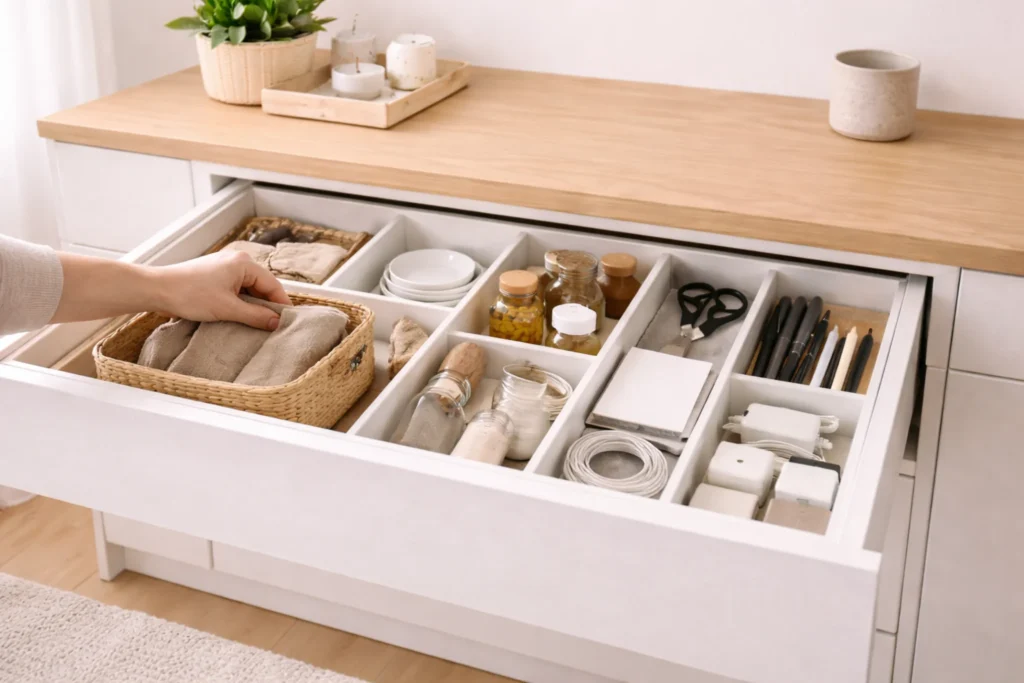
If you reach for it every day, it should not live behind doors. Systems collapse when daily items are buried.
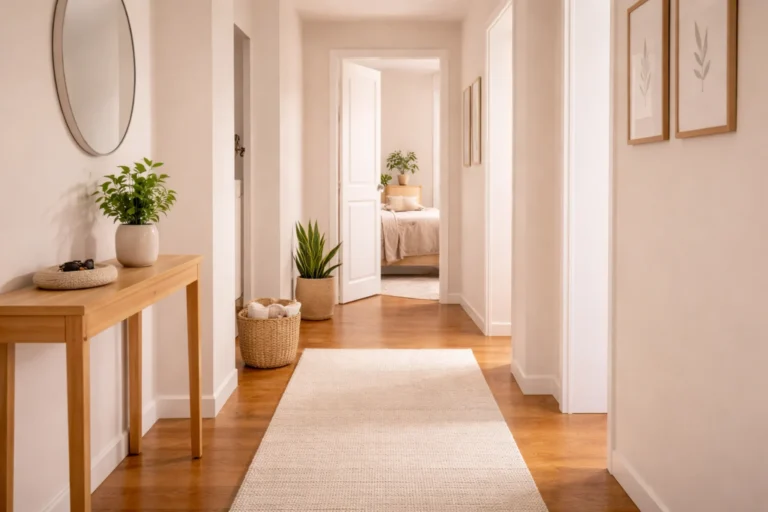
A good example is how compact entryways use layered drop zones. You can see this in action in narrow hallway storage ideas where accessibility is prioritized over hiding.
Zone 2 – Active Rotation Storage
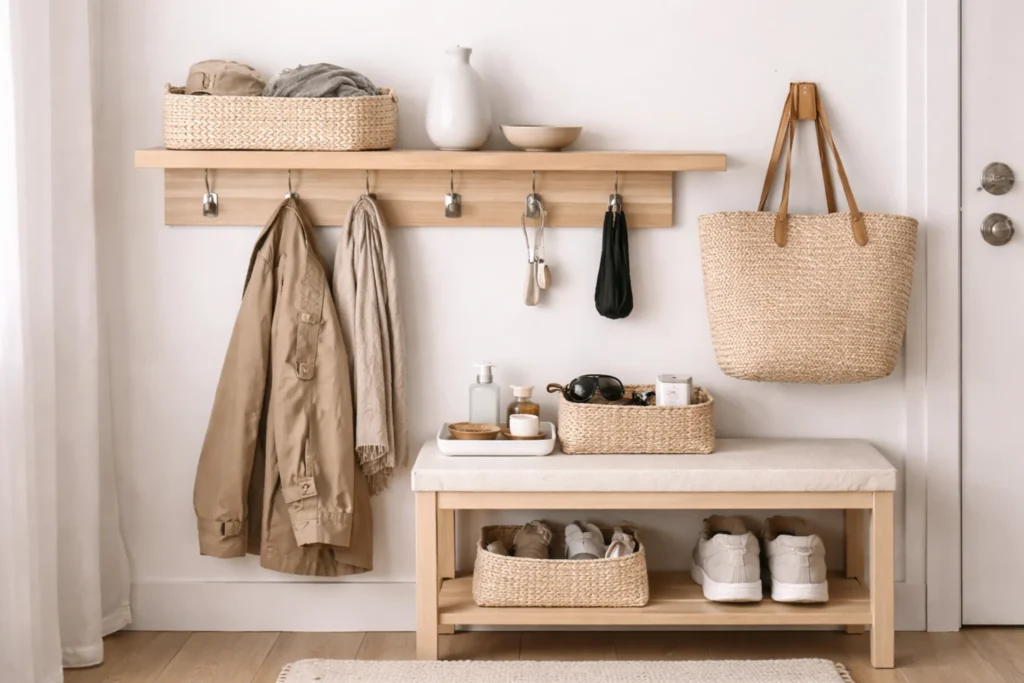
This is your working inventory. Weekly-use items. Backup supplies. Seasonal rotation.
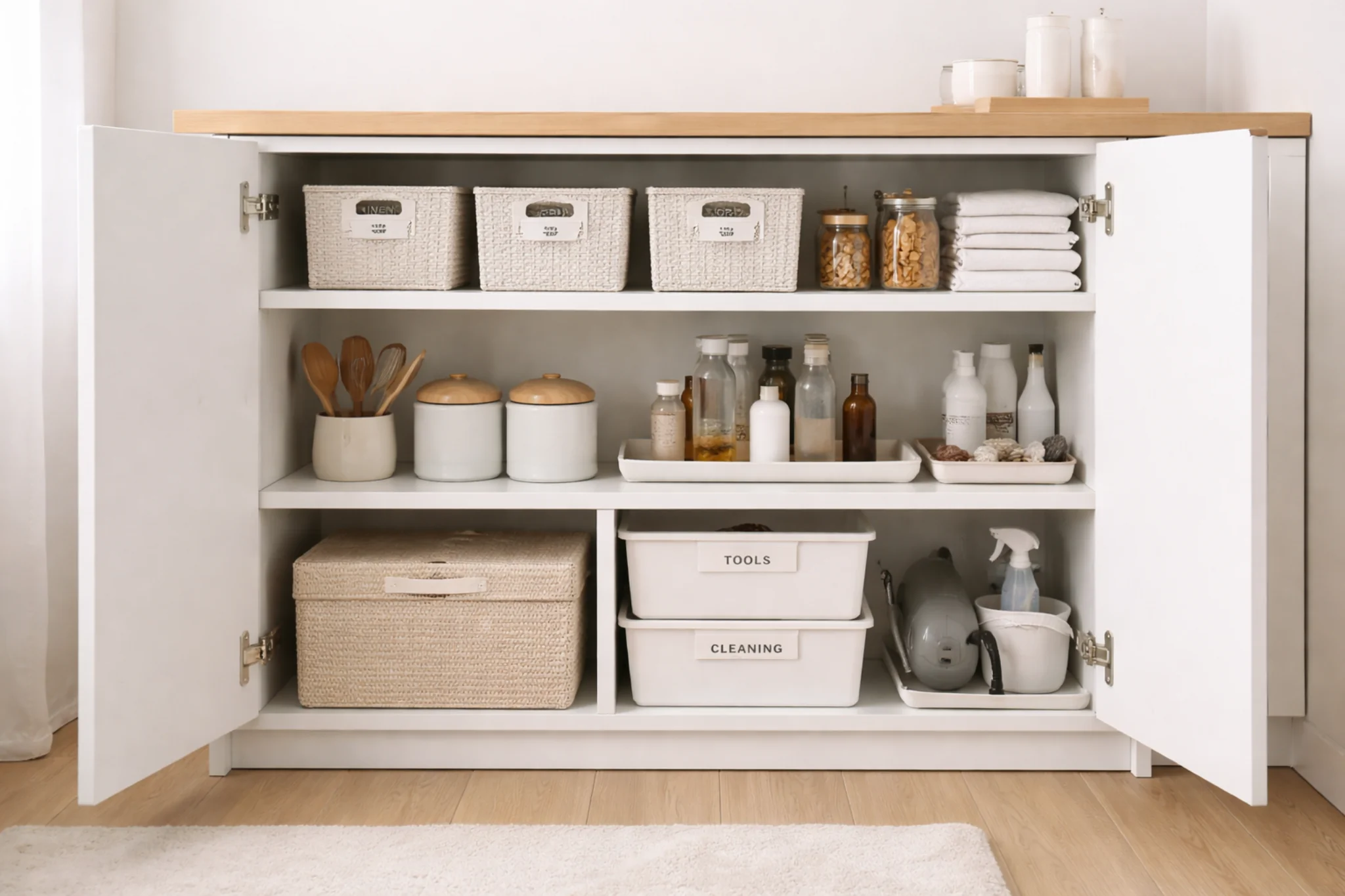
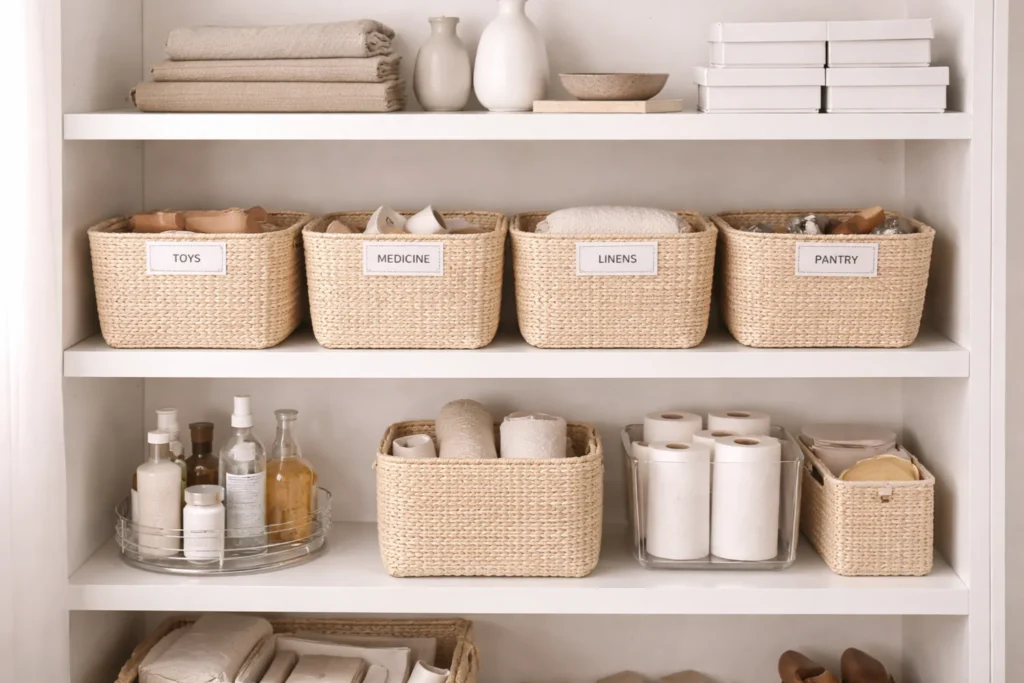
Drawers, mid-level shelves, and labeled baskets belong here. The goal is containment without invisibility.
Clear grouping matters more than aesthetic matching. A labeled basket is stronger than a pretty pile.
If you want affordable modular bins, IKEA’s compact organizers are a good example of systems designed for repetition and stacking.
External reference is about structure, not shopping. The principle is modular repeatability.
Zone 3 – Deep Storage With Rules
This is long-term holding space. Suitcases. archives. off-season items.
Deep storage needs strict boundaries:
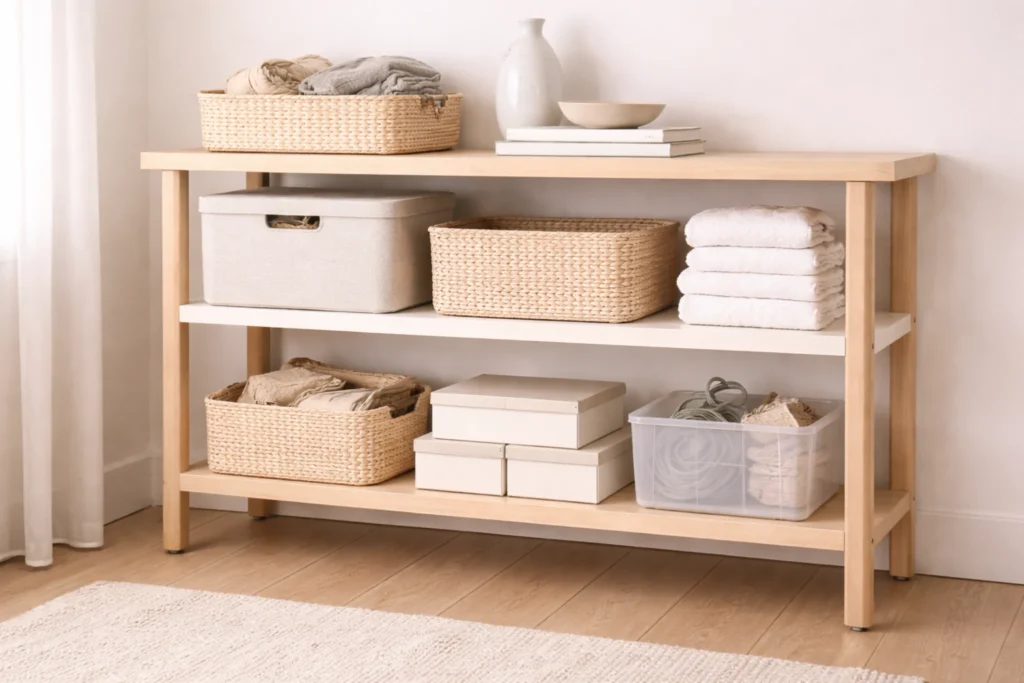
- closed containers
- one category per box
- visual labels
- expiration review every 6 months
If deep storage becomes a dumping ground, your active zones will overflow.
Small homes do not fail from lack of space. They fail from unprotected zones.
You can see how vertical layering helps protect deep storage in compact bedrooms in space saving kids bedroom ideas where upward storage replaces floor clutter.
Designing Systems That Survive Real Life
A system is only as strong as your worst day.
Ask:
- Can I reset this in under 60 seconds?
- Can someone else understand it instantly?
- Does it forgive mistakes?
If the answer is no, simplify.
Most breakdown happens because systems are too precise. Homes need elasticity. A little extra room. A little tolerance.
That is why successful small space storage systems always include buffer zones. An empty basket. A spare drawer. A flex shelf.
Buffer is not waste. It is resilience.
The Reset Ritual That Keeps Systems Alive
Even perfect systems drift.
The solution is a scheduled reset, not constant maintenance.
Once a week:
- clear surfaces
- return strays
- compress categories
- remove one unnecessary item
This takes minutes, not hours. The goal is recalibration, not deep cleaning.
The power of a system is not how it looks on day one. It is how easily it recovers on day 200.
A Home That Holds You Gently
Storage is emotional architecture. When your environment knows where things belong, your brain rests.
Small homes do not need heroic hacks. They need quiet systems that carry the cognitive load for you.
When your space resets itself, you gain something bigger than order. You gain breathing room.
And in a compact home, breathing room is everything.