Powerful Small Space Living Ideas That Make Everyday Life Feel Effortless
Small space living can either feel like a daily compromise or a quiet upgrade to how you live. Small space living, when designed around rhythm instead of rigid rules, creates a home that feels lighter, calmer, and easier to maintain. I noticed this shift when I stopped chasing perfect layouts and started paying attention to how my space actually supported my day.
This guide shares small space living ideas that focus on flow, flexibility, and comfort, without requiring a big budget or major renovations.
Design Around Flow, Not Square Footage
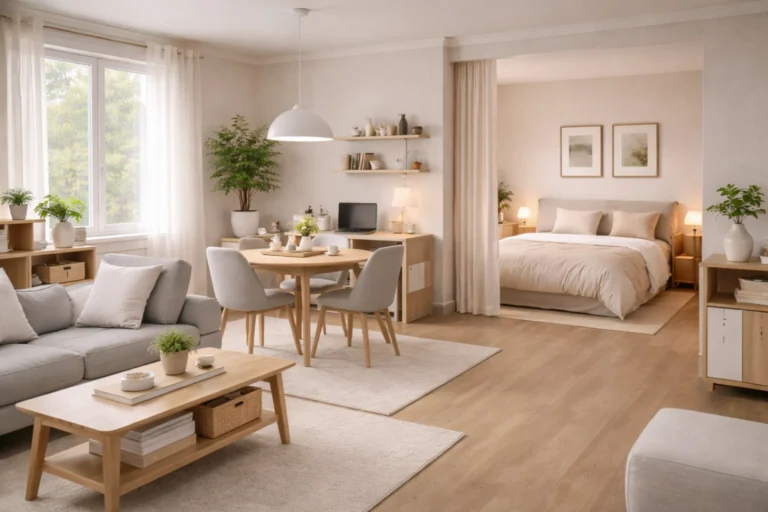
One of the biggest breakthroughs in small space living is realizing that comfort comes from movement, not measurements. Even a well-decorated apartment can feel stressful if furniture blocks natural paths or forces awkward detours.
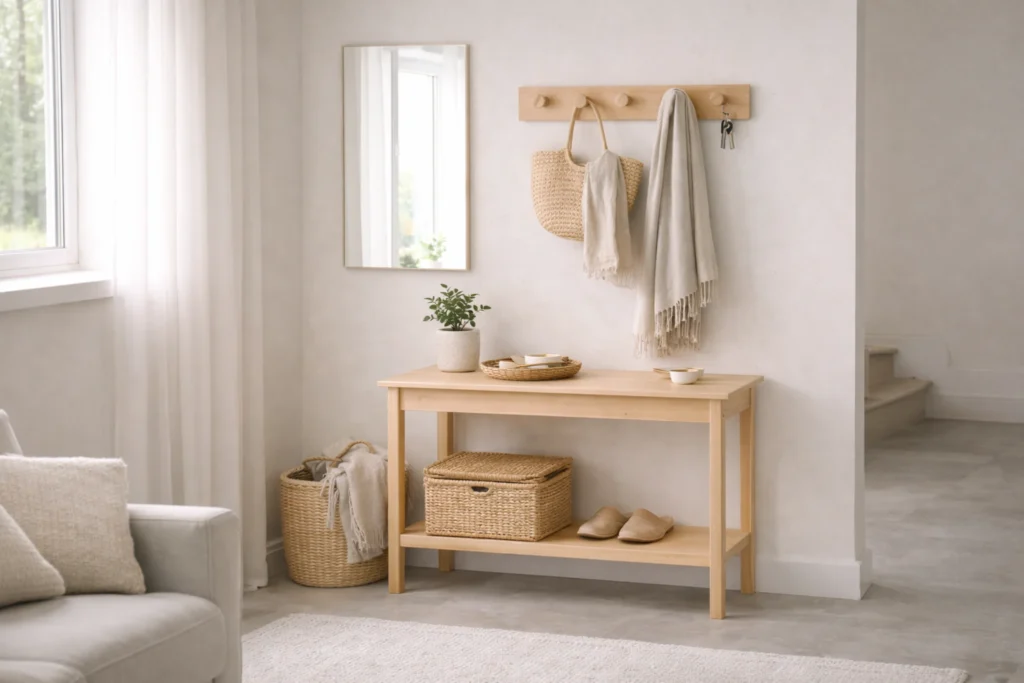
Think about where you naturally pause during the day. Where do you drop your bag, sit down, or recharge? Designing around those moments instantly improves how a small home feels.
Many of these flow principles also apply when setting up a small entryway or living area.
Let Furniture Flex With Your Day
Rigid furniture makes small spaces feel smaller. Small space living works best when furniture can shift roles throughout the day.
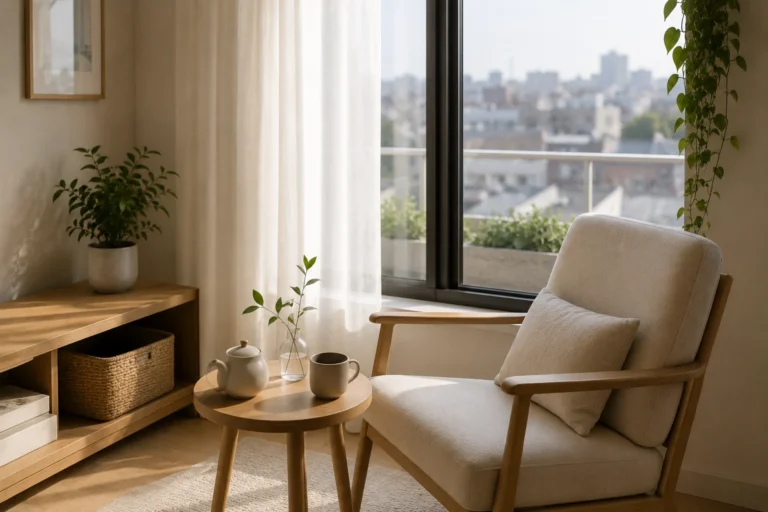
A table that becomes a desk, a bench that hides storage, or stools that tuck away easily all allow one area to serve multiple purposes. This flexibility reduces visual clutter and makes rooms feel more open.
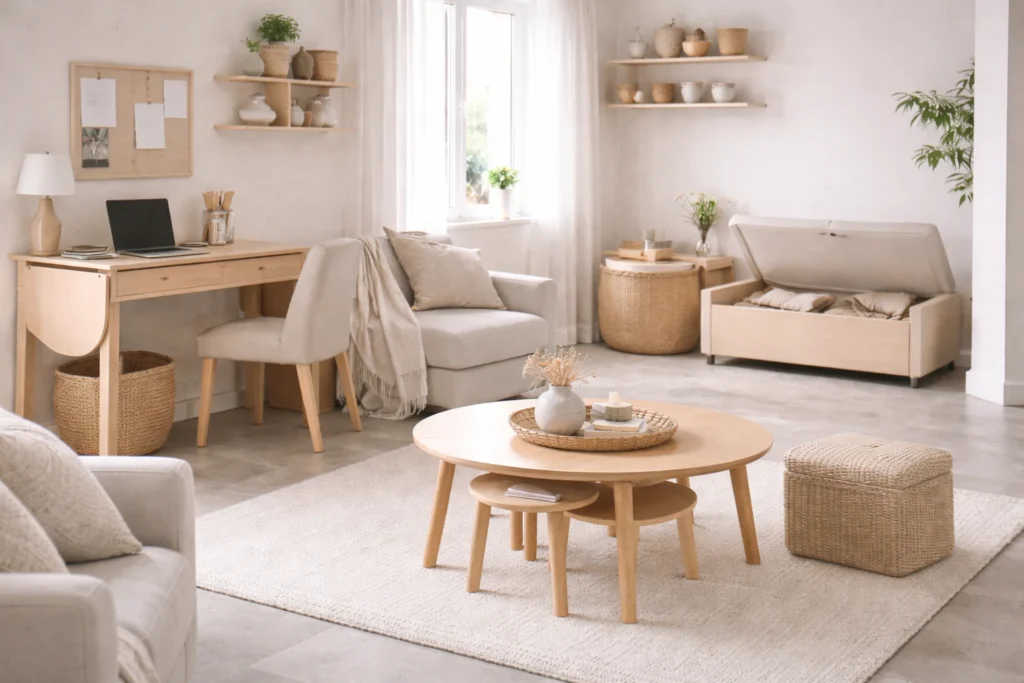
Budget-friendly flexible furniture options are widely available at Target, especially in their small-space and apartment collections.
Balance Open and Closed Storage for Visual Calm
Many small space living guides focus heavily on hiding everything, but too much closed storage can make a room feel boxed in. The key is balance.
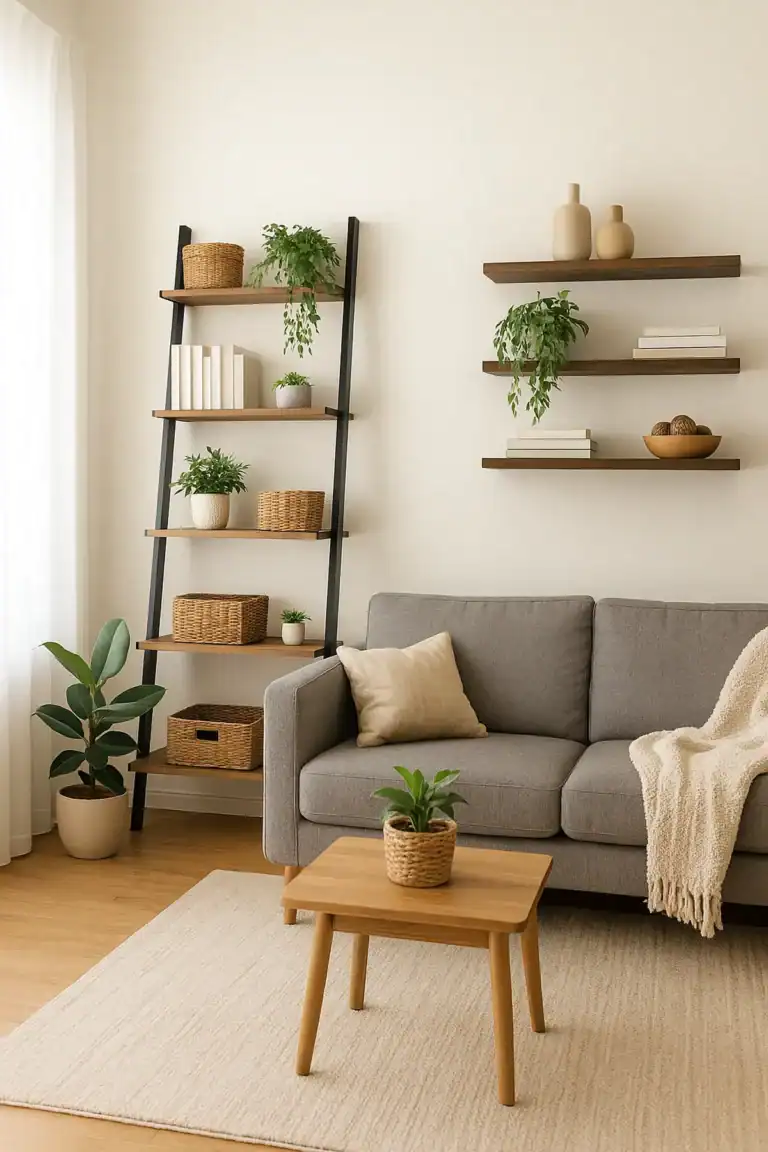
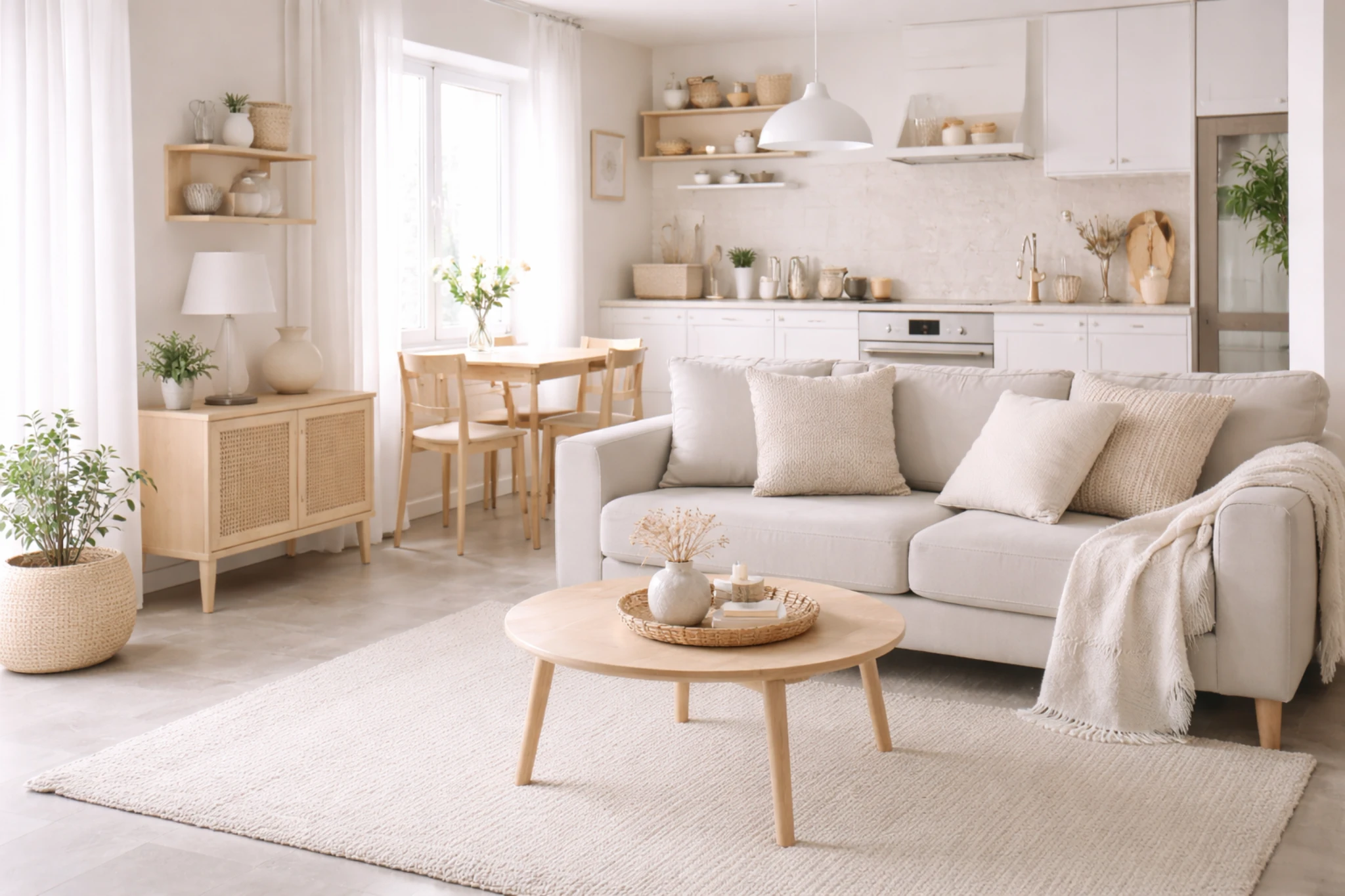
Open storage works well for items you use daily and enjoy seeing, while closed storage is better for backups, seasonal items, or visual clutter. When both are used intentionally, the space feels lighter and more breathable.
For more tips on making storage both beautiful and functional in compact spaces, check out our small closet organization ideas for beginners.
Create Calm Through Repetition, Not Minimalism
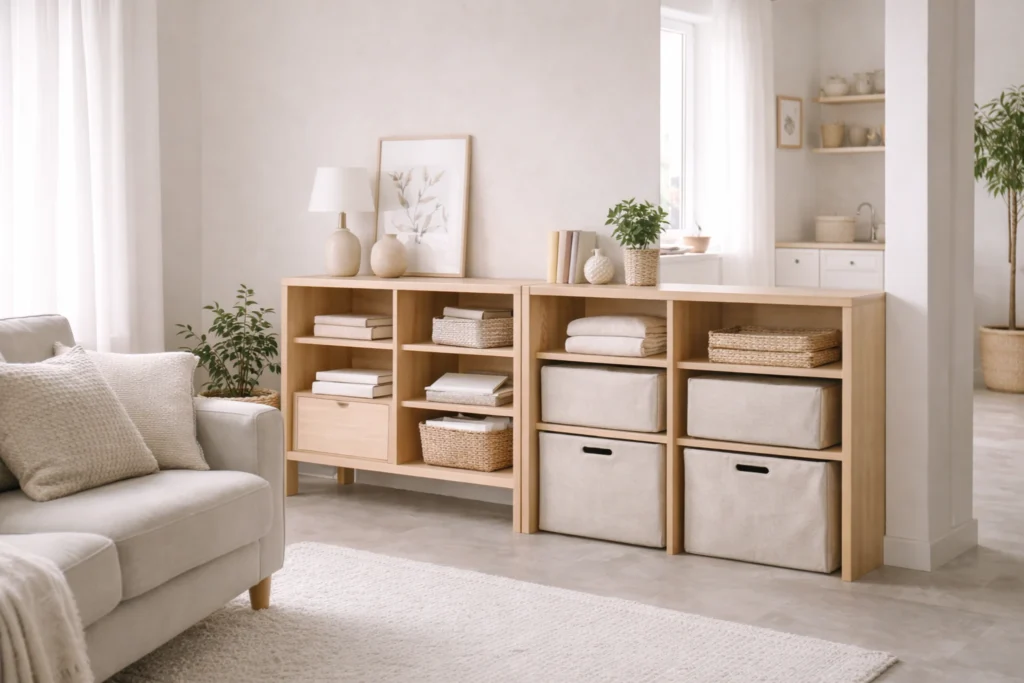
Small space living does not require owning less, it requires owning smarter. Visual repetition is one of the simplest ways to create calm without extreme decluttering.
Repeating similar materials, colors, or container styles helps the eye rest. Even when shelves are full, the space still feels intentional instead of busy.
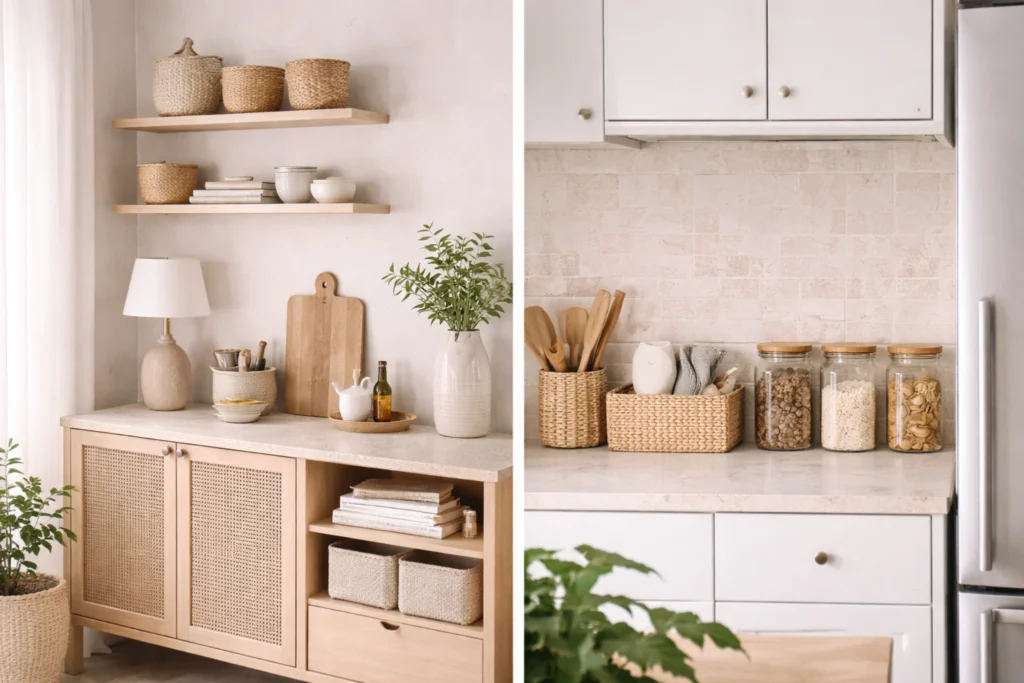
This approach is especially renter-friendly since it relies on styling choices rather than permanent changes.
Build Small Habits That Protect Your Space
In small homes, habits matter more than square footage. Small space living becomes easier when daily routines support the layout.
Simple habits like resetting one surface at night or maintaining a designated drop zone prevent clutter from spreading. These routines reduce mental load and make small spaces feel more manageable long-term. If you need a simple starting point, these small closet organization ideas for beginners show how small, repeatable habits can keep even the tightest spaces feeling calm and functional.
Use Lighting to Expand the Feel of a Room
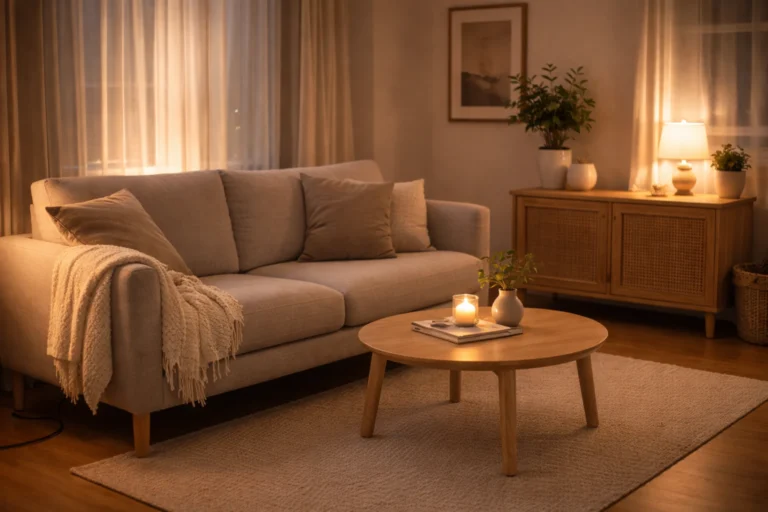
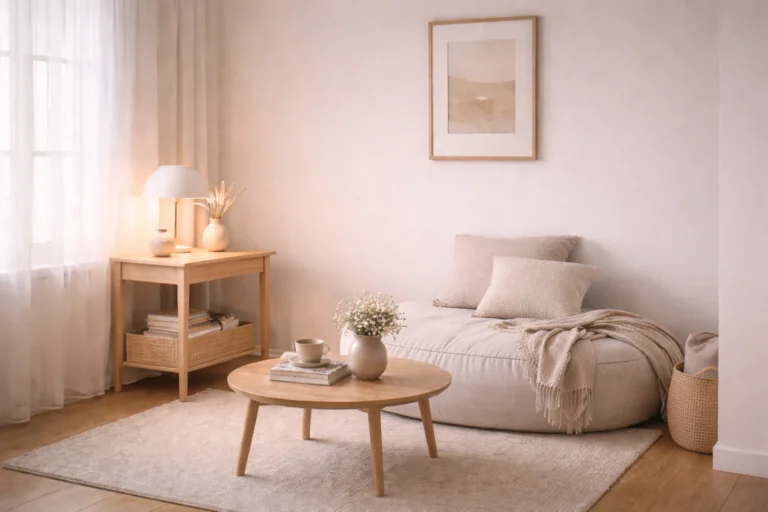
Lighting quietly shapes how small spaces feel. A single overhead light often flattens a room, while layered lighting adds warmth and depth.
Adding a table lamp, wall-mounted light, or soft bulb can instantly make a compact space feel more intentional. Lighting is one of the most affordable upgrades for small space living.
Living Well in Less Space
Small space living is less about mastering layout tricks and more about creating ease in your everyday routines. When your home supports how you actually move, rest, and reset, even a compact space can feel grounding.
The most effective small space living ideas are often the simplest ones – flexible furniture, intentional storage, and small habits that protect your space from daily clutter. Over time, these choices add up to a home that feels lighter, calmer, and easier to live in.
A small home does not need to be perfect. It just needs to work for you.